国际口腔医学杂志 ›› 2026, Vol. 53 ›› Issue (1): 59-66.doi: 10.7518/gjkq.2026103
赵芮1( ),王丹2,吕雅琪3,崔珂3,池婷2,黄汉尧2,李杨2,石冰2,龚彩霞2()
Rui Zhao1(),Dan Wang2,Yaqi Lü3,Ke Cui3,Ting Chi2,Hanyao Huang2,Yang Li2,Bing Shi2,Caixia Gong2()
摘要:
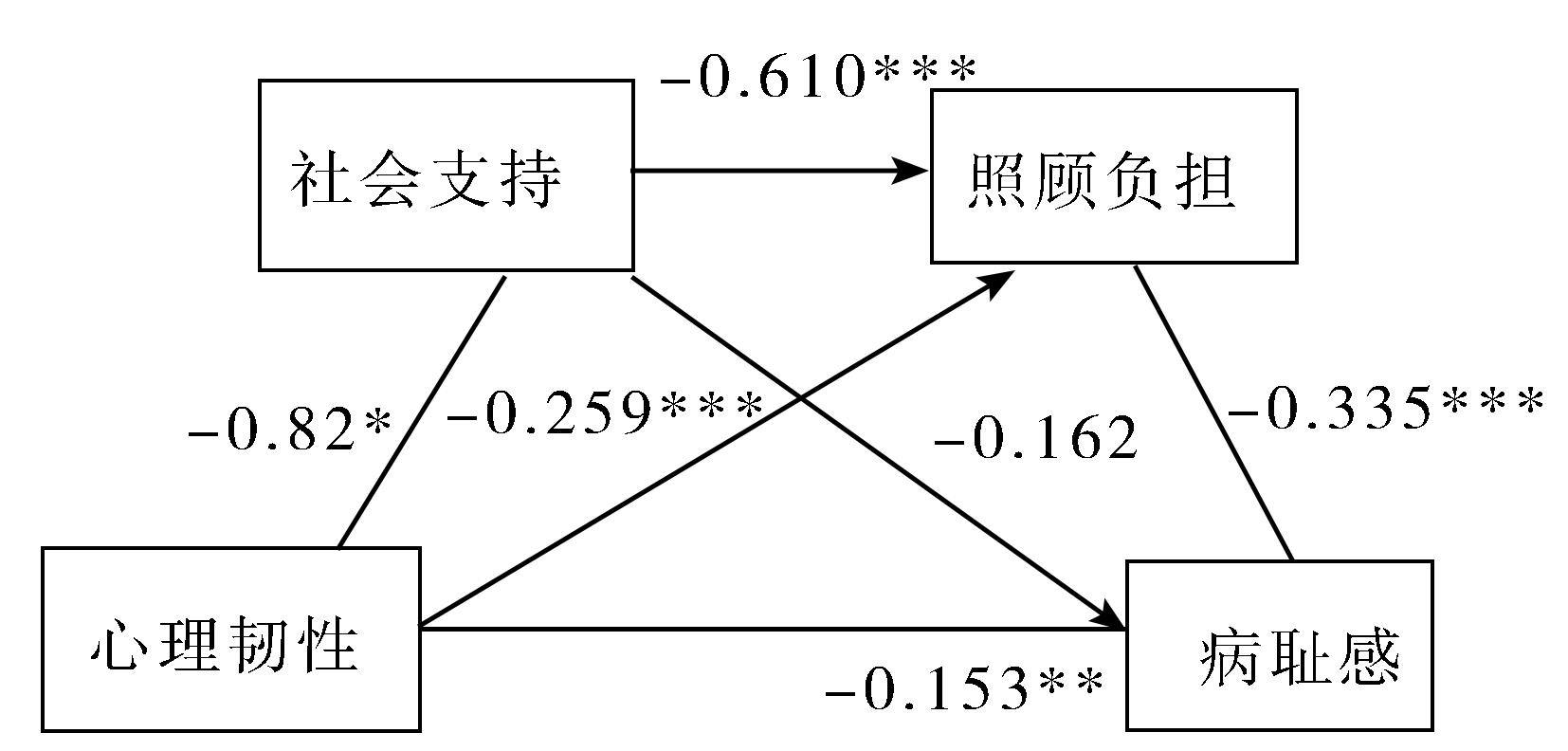
目的 探讨唇腭裂患儿母亲病耻感现状及影响因素,为唇腭裂家庭进行心理支持提供新的视角与干预依据。 方法 选取127名承担主要照顾者责任的唇腭裂患儿母亲作为研究对象。应用社会影响量表、社会支持评定量表、心理韧性量表、照顾负担量表和自制人口学一般资料问卷进行调查,统计各量表得分并进行相关性分析。 结果 唇腭裂患儿母亲的病耻感水平与家庭月收入、患儿年龄<3岁与7~12岁2组间具有显著关系(P<0.05);唇腭裂患儿母亲的病耻感与社会支持关系显著(P<0.05)但无线性关系;与心理韧性呈负相关(β=-0.241,P=0.002);与照顾者负担得分呈正相关(β=0.428,P<0.001);链式中介效应分析显示,照顾负担-心理韧性-社会支持在唇腭裂患儿母亲病耻感间起部分中介效应作用(P<0.05)。 结论 唇腭裂患儿母亲普遍存在病耻感。其病耻感与患儿年龄、经济因素、心理韧性、照顾负担、社会支持相关。医护人员应采取针对性的干预措施减少患儿母亲的病耻感,改善以患儿为主的整个家庭的长期生活质量。
中图分类号:
| [1] | 殷斌, 石冰, 贾仲林. 非综合征型唇腭裂非编码区变异功能研究策略[J]. 口腔生物医学, 2019, 10(1): 37-42. |
| Yin B, Shi B, Jia ZL. Research strategy on the function of non-coding region variations in non-syndromic orofacial clefts[J]. Oral Biomed, 2019, 10(1): 37-42. | |
| [2] | Costa B, White P, Kiff JD, et al. Parent-reported socioemotional and cognitive development in children with a cleft lip and/or palate at 18 months: findings from a UK birth cohort[J]. Child, 2021, 47(1): 31-39. |
| [3] | Thohinung U, Prathanee B. Caregivers’ role in ca-ring for children with cleft lip-palate in mobile speech camp[J]. J Med Assoc Thai, 2016, 99(): S21-S28. |
| [4] | 王彦利, 辛晓龙, 王席娟, 等. 癫痫患儿主要照顾者照顾负担影响因素分析[J]. 临床心身疾病杂志, 2022, 28(5): 49-53. |
| Wang YL, Xin XL, Wang XJ, et al. Analysis of influencing factors of care burden of primary caregi-vers in children with epilepsy[J]. J Clin Psychosom Dis, 2022, 28(5): 49-53. | |
| [5] | 荀阳, 王君妍, 原露露, 等. 唇腭裂患儿家长亲职压力现状及影响因素研究[J]. 护理研究, 2022, 36(20): 3598-3603. |
| Xun Y, Wang JY, Yuan LL, et al. Status quo and influencing factors of parental stress among parents of children with cleft lip and palate[J]. Chin Nurs Res, 2022, 36(20): 3598-3603. | |
| [6] | Stewart BT, Hatcher KW, Sengupta A, et al. Cleft-related infanticide and abandonment: a systematic review of the academic and lay literature[J]. Cleft Palate Craniofac J, 2018, 55(1): 98-104. |
| [7] | Presley CJ, Arrato NA, Shields PG, et al. Functional trajectories and resilience among adults with advanced lung cancer[J]. JTO Clin Res Rep, 2022, 3(6): 100334. |
| [8] | 刘静娟, 郝路路, 孟艳丽, 等. 肿瘤患者家庭照顾者心理韧性、希望水平和社会影响的相关性研究[J]. 医药高职教育与现代护理, 2024, 7(1): 83-87. |
| Liu JJ, Hao LL, Meng YL, et al. A study on the correlation of mental resilience, hope level and social influence among family caregivers of cancer patients[J]. Med High Vocat Educ Mod Nurs, 2024, 7(1): 83-87. | |
| [9] | 李彩菲, 陈玉静, 刘通. 多元化社会支持的护理干预在妊娠期糖尿病患者围生期中的应用[J]. 检验医学与临床, 2022, 19(6): 831-833. |
| Li CF, Chen YJ, Liu T. Application of nursing intervention with diversified social support in the perinatal period of patients with gestational diabetes mellitus[J]. Lab Med Clin, 2022, 19(6): 831-833. | |
| [10] | Zhang HL, Zhao QH, Cao PY, et al. Resilience and quality of life: exploring the mediator role of social support in patients with breast cancer[J]. Med Sci Monit, 2017, 23: 5969-5979. |
| [11] | Fujimoto T, Kotani S, Suzuki R. Work-family conflict of nurses in Japan[J]. J Clin Nurs, 2008, 17(24): 3286-3295. |
| [12] | Pan AW, Chung L, Fife BL, et al. Evaluation of the psychometrics of the social impact scale: a measure of stigmatization[J]. Int J Rehabil Res, 2007, 30(3): 235-238. |
| [13] | 肖水源. 《社会支持评定量表》的理论基础与研究应用[J]. 临床精神医学杂志, 1994, 4(2): 98-100. |
| Xiao SY. Theoretical basis and research application of social support rating scale[J]. J Clin Psychol Med, 1994, 4(2): 98-100. | |
| [14] | Connor KM, Davidson JRT. Development of a new resilience scale: the Connor-Davidson Resilience Scale (CD-RISC) [J]. Depress Anxiety, 2003, 18(2): 76-82. |
| [15] | Novak M, Guest C. Application of a multidimensional caregiver burden inventory[J]. Gerontologist, 1989, 29(6): 798-803. |
| [16] | 岳鹏, 付艺, 尚少梅, 等. 照顾者负担问卷的信度和效度检验[J]. 中国心理卫生杂志, 2006, 20(8): 562-564. |
| Yue P, Fu Y, Shang SM, et al. Reliability and validity of the caregiver burden inventory[J]. Chin Ment Health J, 2006, 20(8): 562-564. | |
| [17] | 刘培培, 王庆东, 张莉, 等. 心理一致感在癫痫儿童主要照顾者连带病耻感与照顾负担间的中介效应[J]. 护士进修杂志, 2023, 38(13): 1169-1173. |
| Liu PP, Wang QD, Zhang L, et al. The mediating effect of sense of coherence between affiliate stigma and care burden in the main caregivers of children with epilepsy[J]. J Nurs Train, 2023, 38(13): 1169-1173. | |
| [18] | 陈利琴, 刘镒, 沈怡, 等. 先天性唇腭裂患儿主要照顾者负担状况及影响因素调查[J]. 军事护理, 2022, 39(7): 57-60. |
| Chen LQ, Liu Y, Shen Y, et al. Status quo and in-fluencing factors of the burden among primary caregivers of children with congenital cleft lip and palate[J]. Mil Nurs, 2022, 39(7): 57-60. | |
| [19] | Oka A, Tanikawa C, Ohara H, et al. Relationship between stigma experience and self-perception related to facial appearance in young Japanese patients with cleft lip and/or palate[J]. Cleft Palate Craniofac J, 2023, 60(12): 1546-1555. |
| [20] | Sunal Akturk E, Seker ED, Capkın D, et al. Evaluation of anxiety in Turkish parents of newborns with cleft palate with or without cleft lip[J]. Cleft Palate Craniofac J, 2024, 61(3): 492-497. |
| [21] | 刘师垚, 刘嘉昱, 陈丽先, 等. 我国唇腭裂患者及家属心理干预模式刍议[J]. 实用口腔医学杂志, 2023, 39(3): 390-395. |
| Liu SY, Liu JY, Chen LX, et al. On psychological intervention model of cleft lip and palate patients and their families in China[J]. J Pract Stomatol, 2023, 39(3): 390-395. | |
| [22] | Lorot-Marchand A, Guerreschi P, Pellerin P, et al. Frequency and socio-psychological impact of taun-ting in school-age patients with cleft lip-palate surgical repair[J]. Int J Pediatr Otorhinolaryngol, 2015, 79(7): 1041-1048. |
| [23] | 龚彩霞, 哈品, 石冰. 心理护理在唇腭裂治疗中的应用[J]. 国际口腔医学杂志, 2017, 44(4): 377-379. |
| Gong CX, Ha P, Shi B. Psychological nurse care in the treatment of cleft lip and palate[J]. Int J Stomatol, 2017, 44(4): 377-379. | |
| [24] | 白雅雯, 袁冯, 梁悦悦, 等. 青少年唇腭裂患者心理健康状况与应对方式和自我接纳水平的相关性分析[J]. 淮海医药, 2023, 41(6): 585-588. |
| Bai YW, Yuan F, Liang YY, et al. Correlation analysis of mental health status, coping style and self-acceptance level of adolescent patients with cleft lip and palate[J]. J Huaihai Med, 2023, 41(6): 585-588. | |
| [25] | 陈宇翔, 黄群, 闫怡轩, 等. 先天性唇腭裂三级综合防治及规范化序列治疗指引[J/OL]. 中华口腔医学研究杂志(电子版), 2021, 15(4): 193-197. |
| Chen YX, Huang Q, Yan YX, et al. The practice guideline for tertiary integrated control and team approach techniques of the congenital cleft lip and pa-late[J/OL]. Chin J Stomatol Res Electron Ed, 2021, 15(4): 193-197. | |
| [26] | Kwon T. Social stigma, ego-resilience, and depressive symptoms in adolescent school dropouts[J]. J Adolesc, 2020, 85: 153-163. |
| [27] | Dai JL, Sun DW, Li BH, et al. Mixed-Mode Mindfulness-based cognitive therapy for psychological resilience, Self Esteem and Stigma of patients with schizophrenia: a randomized controlled trial[J]. BMC Psychiatry, 2024, 24(1): 179. |
| [28] | Çınar S, Ay A, Boztepe H, et al. “Unexpected event”: having an infants with cleft lip and/or palate[J]. Congenit Anom (Kyoto), 2021, 61(2): 38-45. |
| [29] | 刘寿娟, 张燕红, 汤明文, 等. 连带病耻感对精神分裂症患者主要照顾者照顾负担的影响[J]. 中华护理杂志, 2021, 56(2): 239-244. |
| Liu SJ, Zhang YH, Tang MW, et al. The impact of stigma on care burden in primary caregivers of schizophrenics[J]. Chin J Nurs, 2021, 56(2): 239-244. | |
| [30] | 祝丹, 龚彩霞, 石冰, 等. 综合喂养指导在唇腭裂婴儿生长发育期的积极作用研究[J]. 现代医药卫生, 2021, 37(17): 2987-2990. |
| Zhu D, Gong CX, Shi B, et al. Positive effect of comprehensive feeding guidance on growth and development of infants with cleft lip and palate[J]. J Mod Med Health, 2021, 37(17): 2987-2990. | |
| [31] | Hui LH, Ling EY, Rusli YA, et al. Language abilities and associated risk factors of school-aged children with cleft lip and palate[J]. PLoS One, 2024, 19(4): e0299095. |
| [32] | 刘静. 阿尔茨海默病患者家庭照顾者连带病耻感现状及其与照顾者负担的关系[J]. 辽宁医学杂志, 2022, 36(6): 3-6. |
| Liu J. Current status of stigma associated with family caregivers of patients with Alzheimer’s disease and its relationship with caregiver burden[J]. Liao-ning Med J, 2022, 36(6): 3-6. | |
| [33] | Li JN, Liang WQ, Yuan BC, et al. Internalized stigmatization, social support, and individual mental health problems in the public health crisis[J]. Int J Environ Res Public Health, 2020, 17(12): 4507. |
| [34] | Cohen S. Social relationships and health[J]. Am Psychol, 2004, 59(8): 676-684. |
| [1] | 王晓萌,邝海,何灏逾,李鸿艺,林洁舲,李飞燕. 唇腭裂语音治疗效果及相关因素研究分析[J]. 国际口腔医学杂志, 2025, 52(5): 627-633. |
| [2] | 张婉琼,郑谦,贾仲林. 核糖体蛋白L5在Diamond-Blackfan贫血伴发唇腭裂中作用机制的研究进展[J]. 国际口腔医学杂志, 2024, 51(6): 749-755. |
| [3] | 夏溦瑶,贾仲林. 维生素与唇腭裂发生相关性的研究进展[J]. 国际口腔医学杂志, 2023, 50(6): 632-638. |
| [4] | 万雪丽,石永乐,张秀芬,王欢,田莉. 唇腭裂患儿全身麻醉苏醒期躁动多维干预体系的构建研究[J]. 国际口腔医学杂志, 2023, 50(3): 272-278. |
| [5] | 陈卓,石冰,李精韬. 唇腭裂患者外鼻生长特征的研究进展[J]. 国际口腔医学杂志, 2023, 50(3): 279-286. |
| [6] | 裴玲,曾妮,杨超,何苗,罗强,石冰,郑谦. 辅助局部麻醉对唇腭裂整复术后镇痛效果的研究[J]. 国际口腔医学杂志, 2022, 49(6): 657-662. |
| [7] | 黄艺璇,石冰,李精韬. 唇腭裂患者鼻通气功能的研究进展[J]. 国际口腔医学杂志, 2022, 49(4): 453-461. |
| [8] | 张琦,范存晖,杨茜,李然,徐晓琳,丁玮,王文惠,杨彩秀. 替牙期骨性Ⅲ类单侧完全性唇腭裂与非唇腭裂患者牙弓形态的对比研究[J]. 国际口腔医学杂志, 2022, 49(2): 144-152. |
| [9] | 孙嘉琳,林岩松,石冰,贾仲林. 5种常见综合征型唇腭裂遗传学研究进展[J]. 国际口腔医学杂志, 2021, 48(6): 718-724. |
| [10] | 马晓芳,黄永清,石冰,马坚. 双生子模型在唇腭裂病因学研究中的应用[J]. 国际口腔医学杂志, 2021, 48(5): 512-519. |
| [11] | 吴敏,石冰. 唇腭裂婴儿母乳喂养的研究进展[J]. 国际口腔医学杂志, 2021, 48(3): 269-273. |
| [12] | 侯亚丽,马利. 亚洲人群干扰素调节因子6基因多态性与非综合征型唇腭裂相关性研究的Meta分析[J]. 国际口腔医学杂志, 2020, 47(4): 397-405. |
| [13] | 宋少华,莫水学. 唇腭裂患者序列治疗中的正畸治疗[J]. 国际口腔医学杂志, 2019, 46(6): 740-744. |
| [14] | 邓程丹,石冰,李杨. 唇腭裂患者的脑部结构与功能研究进展[J]. 国际口腔医学杂志, 2019, 46(5): 617-620. |
| [15] | 刘丹,毛渤淳,雒如燕,崔珂,石冰,龚彩霞. 唇腭裂患者家庭抗逆力及其影响因素[J]. 国际口腔医学杂志, 2019, 46(3): 297-301. |
|
||