国际口腔医学杂志 ›› 2026, Vol. 53 ›› Issue (4): 526-536.doi: 10.7518/gjkq.2026228
• 论著 • 上一篇
张真语( ),黄梅,崔浩,孙思露,罗小波,江潞,江宇辰()
Zhenyu Zhang(),Mei Huang,Hao Cui,Silu Sun,Xiaobo Luo,Lu Jiang,Yuchen Jiang()
摘要:
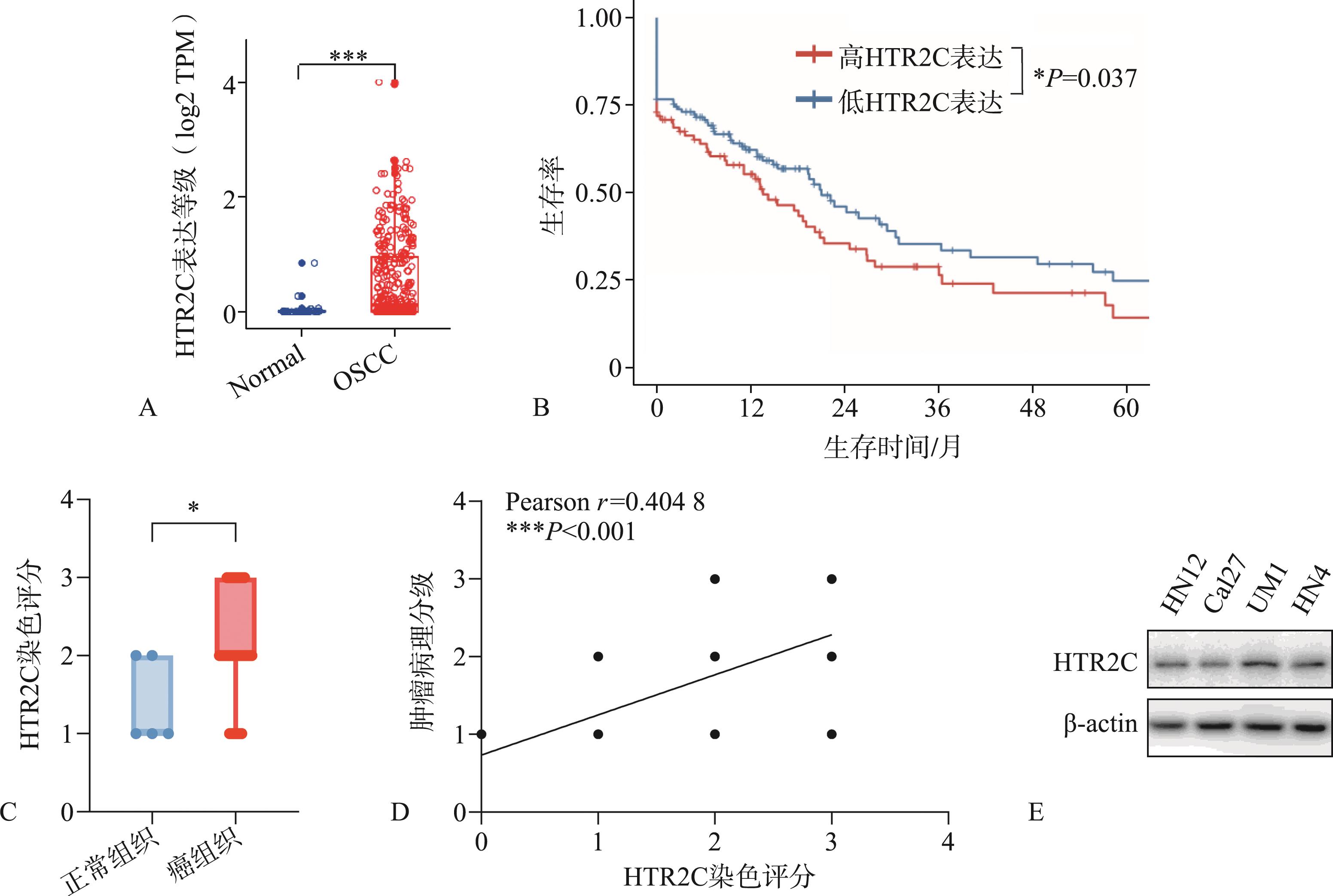
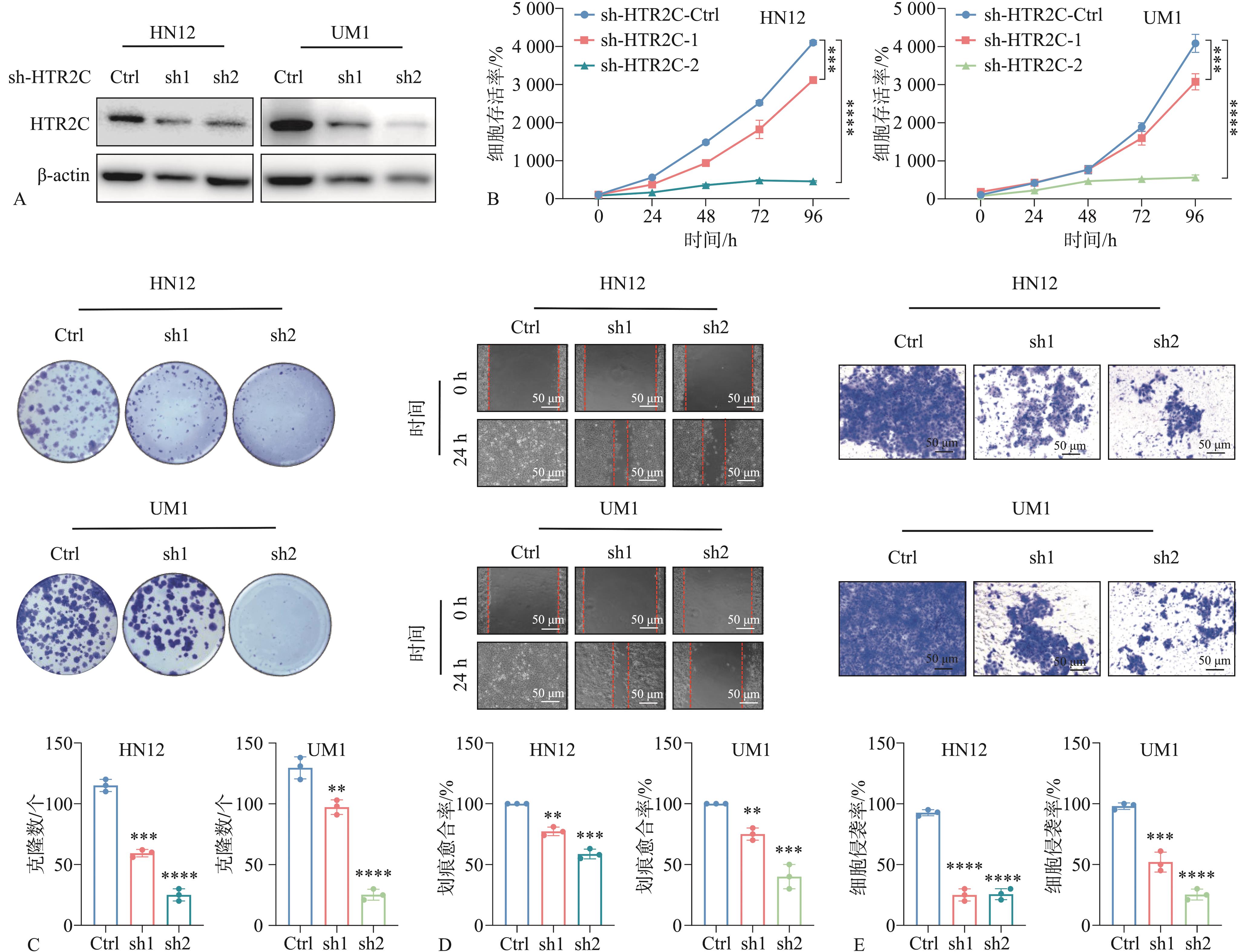
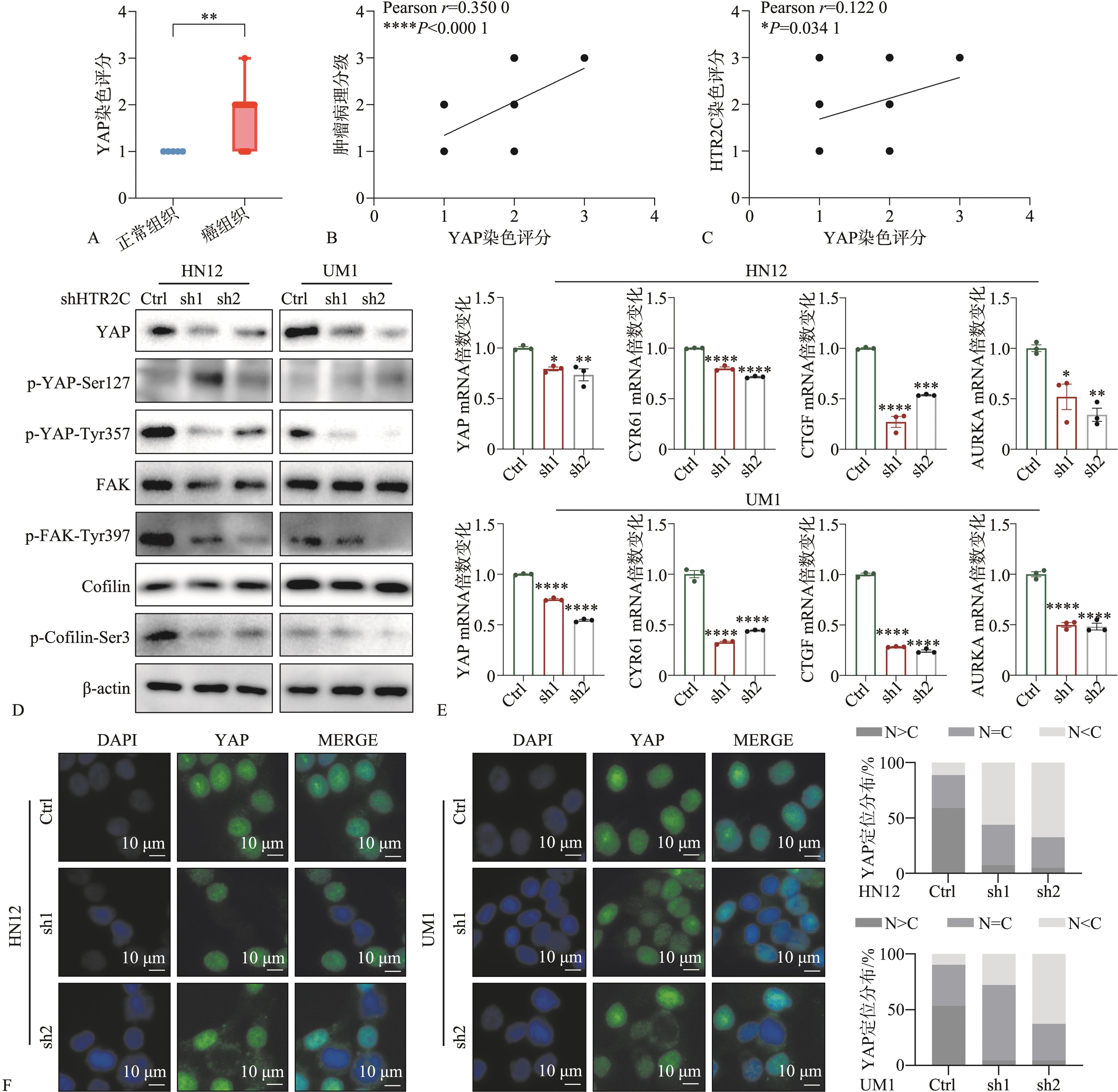
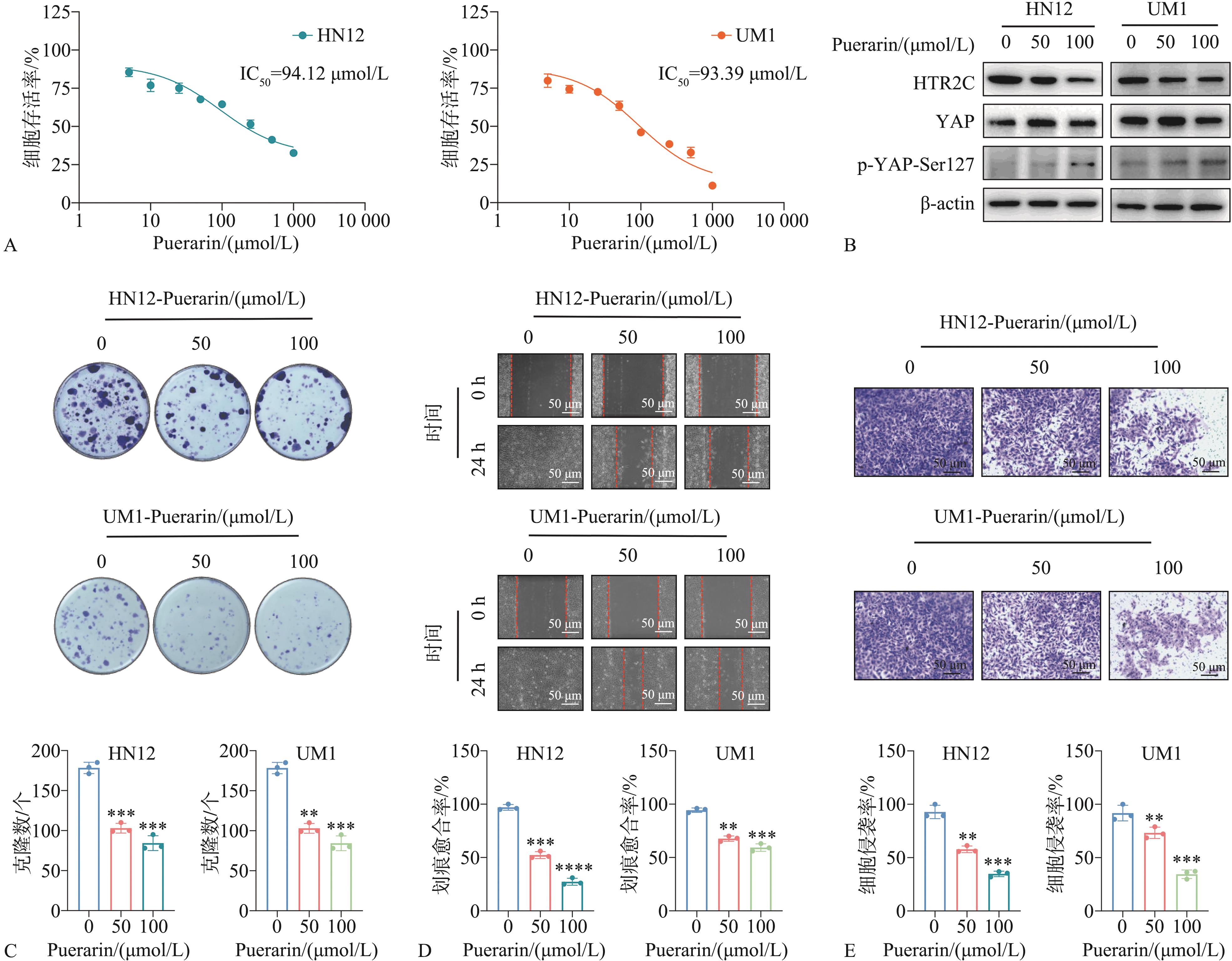
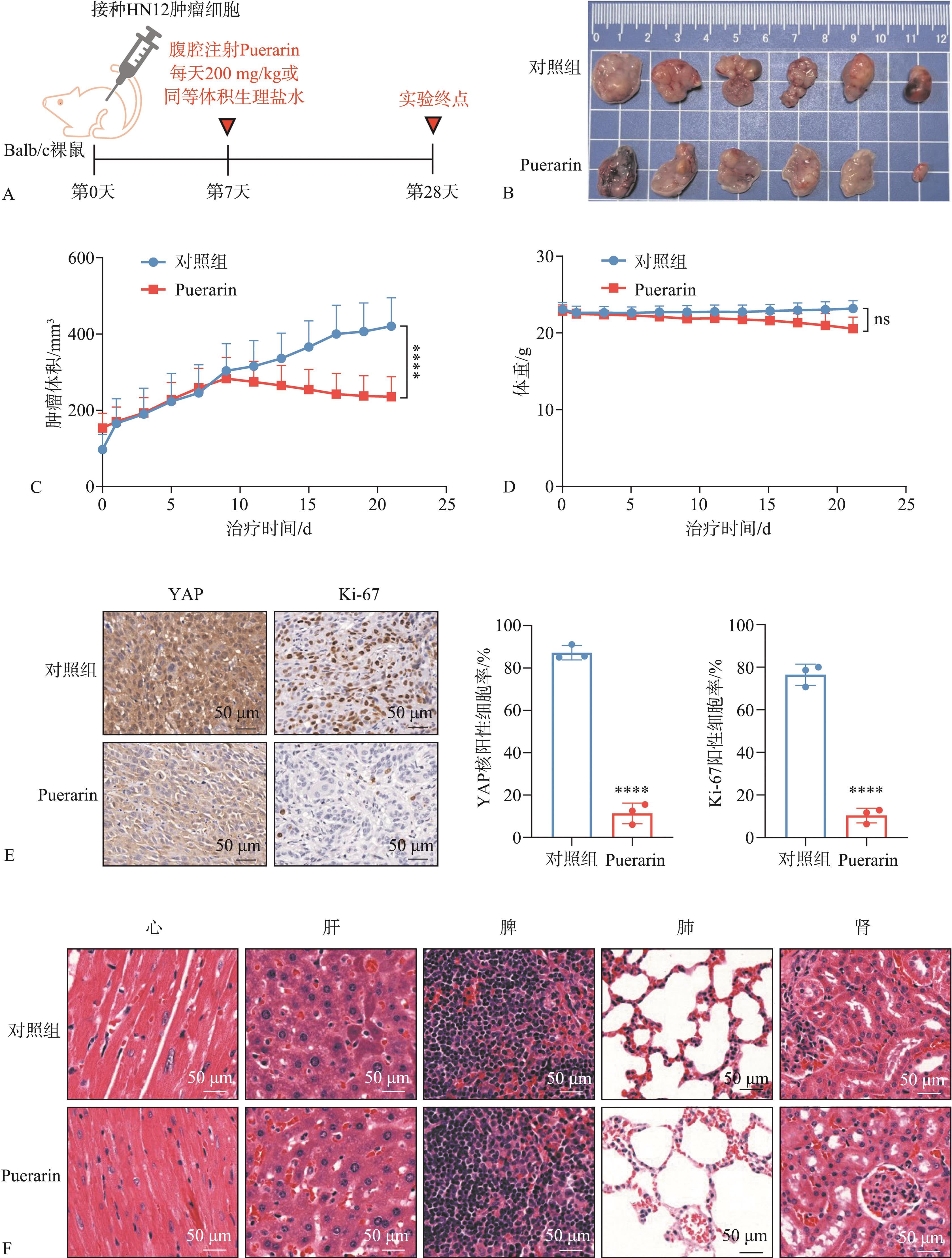
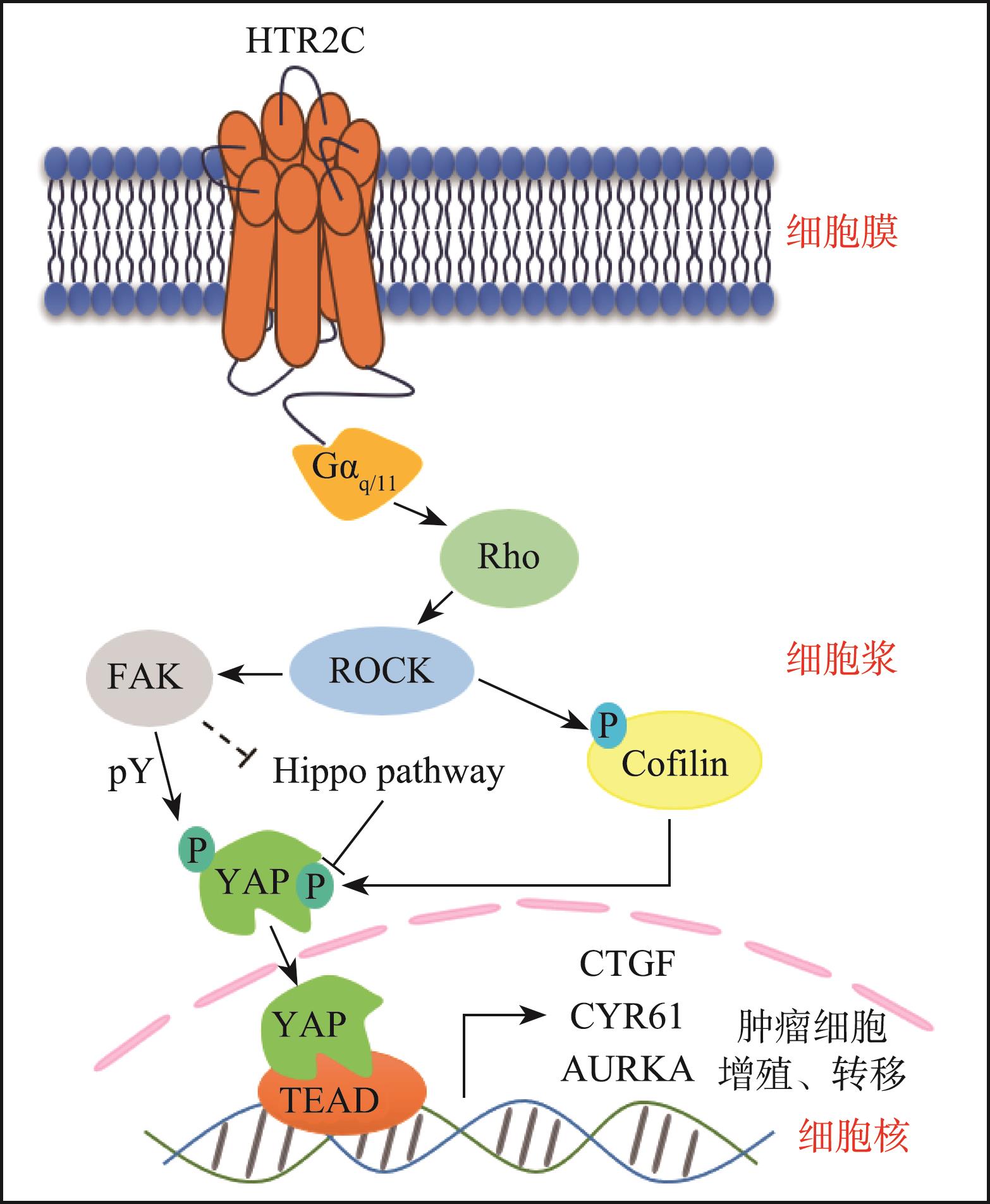
目的 探究5-羟色胺受体2C(HTR2C)通过Gαq/11-Yes相关蛋白(YAP)信号通路对口腔鳞状细胞癌(OSCC)进展的调控作用。 方法 利用TCGA数据库分析HTR2C在OSCC与正常口腔组织中的表达情况及其与患者总生存率的关系。通过免疫组织化学染色在OSCC肿瘤组织芯片中检测HTR2C表达水平,并分析其与临床病理特征的相关性。构建HTR2C敲低的HN12和UM1细胞系,通过细胞计数试剂盒(CCK)-8、克隆形成、划痕和Transwell实验评估HTR2C敲低或其抑制剂Puerarin对OSCC细胞增殖、迁移和侵袭的影响。采用蛋白质印迹(Western blot)、实时荧光定量聚合酶链式反应和免疫荧光检测HTR2C-Gαq/11-YAP信号通路相关蛋白的表达及激活状态。利用裸鼠OSCC皮下移植瘤模型验证HTR2C对OSCC生长的调控作用。 结果 HTR2C在OSCC组织中显著高表达,其高表达与患者不良预后显著相关(P<0.05)。体外实验表明,敲低HTR2C或使用Puerarin显著抑制OSCC细胞的增殖、克隆形成、迁移和侵袭能力(P<0.01),且Puerarin呈剂量依赖性抑制作用。机制研究发现,HTR2C敲低后通过减少黏着斑激酶和丝切蛋白的磷酸化,抑制YAP在Tyr357位点的磷酸化,促进YAP Ser127位点磷酸化,从而抑制YAP的转录活性,降低其下游靶基因CYR61、CTGF和AURKA的表达(P<0.05)。体内实验证实,通过Puerarin抑制HTR2C的表达,可显著抑制OSCC移植瘤的生长(P<0.000 1),这一作用是通过调控YAP信号通路实现的。 结论 OSCC中HTR2C的高表达与患者不良预后显著相关,HTR2C可能经激活Gαq/11-YAP信号通路,调控OSCC细胞的增殖、迁移、侵袭以及体内成瘤能力。本研究提示,HTR2C可能是OSCC治疗的潜在靶点,但仍需进一步的临床研究加以验证。
中图分类号:
| [1] | Mody MD, Rocco JW, Yom SS, et al. Head and neck cancer[J]. Lancet, 2021, 398(10318): 2289-2299. |
| [2] | Chow LQM. Head and neck cancer[J]. N Engl J Med, 2020, 382(1): 60-72. |
| [3] | Tan YH, Wang ZH, Xu MT, et al. Oral squamous cell carcinomas: state of the field and emerging directions[J]. Int J Oral Sci, 2023, 15(1): 44. |
| [4] | Johnson DE, Burtness B, Leemans CR, et al. Head and neck squamous cell carcinoma[J]. Nat Rev Dis Primers, 2020, 6(1): 92. |
| [5] | Gillison ML, Trotti AM, Harris J, et al. Radiotherapy plus cetuximab or cisplatin in human papillomavirus-positive oropharyngeal cancer (NRG Oncology RTOG 1016): a randomised, multicentre, non-inferiority trial[J]. Lancet, 2019, 393(10166): 40-50. |
| [6] | Burtness B, Harrington KJ, Greil R, et al. Pembrolizumab alone or with chemotherapy versus cetu-ximab with chemotherapy for recurrent or metastatic squamous cell carcinoma of the head and neck (KEYNOTE-048): a randomised, open-label, phase 3 study[J]. Lancet, 2019, 394(10212): 1915-1928. |
| [7] | Xiang M, Holsinger FC, Colevas AD, et al. Survival of patients with head and neck cancer treated with definitive radiotherapy and concurrent cisplatin or concurrent cetuximab: a surveillance, epidemiology, and end results-medicare analysis[J]. Cancer, 2018, 124(23): 4486-4494. |
| [8] | Zandberg DP, Cullen K, Bentzen SM, et al. Definitive radiation with concurrent cetuximab vs. radiation with or without concurrent cytotoxic chemotherapy in older patients with squamous cell carcinoma of the head and neck: analysis of the SEER-medicare linked database[J]. Oral Oncol, 2018, 86: 132-140. |
| [9] | Long B, Brém E, Koyfman A. Oncologic emergencies: immune-based cancer therapies and complications[J]. West J Emerg Med, 2020, 21(3): 566-580. |
| [10] | Dorsam RT, Gutkind JS. G-protein-coupled receptors and cancer[J]. Nat Rev Cancer, 2007, 7(2): 79-94. |
| [11] | Smith JS, Pack TF, Inoue A, et al. Noncanonical scaffolding of Gαi and β-arrestin by G protein-coupled receptors[J]. Science, 2021, 371(6534): eaay 1833. |
| [12] | Vecchio EA, White PJ, May LT. The adenosine A2B G protein-coupled receptor: recent advances and therapeutic implications[J]. Pharmacol Ther, 2019, 198: 20-33. |
| [13] | Jiang Y, Li T, Wu Y, et al. GPR39 overexpression in OSCC promotes YAP-sustained malignant progression[J]. J Dent Res, 2020, 99(8): 949-958. |
| [14] | Smith SR, Weissman NJ, Anderson CM, et al. Multicenter, placebo-controlled trial of lorcaserin for weight management[J]. N Engl J Med, 2010, 363(3): 245-256. |
| [15] | Sharretts J, Galescu O, Gomatam S, et al. Cancer risk associated with lorcaserin-the FDA’s review of the CAMELLIA-TIMI 61 trial[J]. N Engl J Med, 2020, 383(11): 1000-1002. |
| [16] | Sola-Penna M, Paixão LP, Branco JR, et al. Serotonin activates glycolysis and mitochondria biogenesis in human breast cancer cells through activation of the Jak1/STAT3/ERK1/2 and adenylate cyclase/PKA, respectively[J]. Br J Cancer, 2020, 122(2): 194-208. |
| [17] | Nakayama J, Tan L, Li Y, et al. A zebrafish embryo screen utilizing gastrulation identifies the HTR2C inhibitor pizotifen as a suppressor of EMT-mediated metastasis[J]. Elife, 2021, 10: e70151. |
| [18] | Zhan DD, Wang X, Zheng YF, et al. Integrative dissection of 5-hydroxytryptamine receptors-related signature in the prognosis and immune microenvironment of breast cancer[J]. Front Oncol, 2023, 13: 1147189. |
| [19] | Lin TC, Soorneedi A, Guan YX, et al. Turicibacter fermentation enhances the inhibitory effects of Antrodia camphorata supplementation on tumorigenic serotonin and Wnt pathways and promotes ROS-mediated apoptosis of Caco-2 cells[J]. Front Pharmacol, 2023, 14: 1203087. |
| [20] | Wang H, Liu J. Exploration of sorafenib influences on gene expression of hepatocellular carcinoma[J]. Front Genet, 2020, 11: 577000. |
| [21] | Zanconato F, Cordenonsi M, Piccolo S. YAP/TAZ at the roots of cancer[J]. Cancer Cell, 2016, 29(6): 783-803. |
| [22] | Feng X, Arang N, Rigiracciolo DC, et al. A platform of synthetic lethal gene interaction networks reveals that the GNAQ uveal melanoma oncogene controls the hippo pathway through FAK[J]. Cancer Cell, 2019, 35(3): 457-472.e5. |
| [23] | Brodie BB, Shore PA. A concept for a role of serotonin and norepinephrine as chemical mediators in the brain[J]. Ann N Y Acad Sci, 1957, 66(3): 631-642. |
| [24] | Michaelson IA, Whittaker VP. The subcellular loca-lization of 5-hydroxytryptamine in guinea pig brain[J]. Biochem Pharmacol, 1963, 12: 203-211. |
| [25] | Zieher LM, DeRobertis E. Subcellular localization of 5-hydroxytryptamine in rat brain[J]. Biochem Pharmacol, 1963, 12: 596-598. |
| [26] | Mohammad-Zadeh LF, Moses L, Gwaltney-Brant SM. Serotonin: a review[J]. J Vet Pharmacol Ther, 2008, 31(3): 187-199. |
| [27] | Zamani A, Qu Z. Serotonin activates angiogenic phosphorylation signaling in human endothelial cells[J]. FEBS Lett, 2012, 586(16): 2360-2365. |
| [28] | Yadav VK, Balaji S, Suresh PS, et al. Pharmacological inhibition of gut-derived serotonin synthesis is a potential bone anabolic treatment for osteoporosis[J]. Nat Med, 2010, 16(3): 308-312. |
| [29] | Rapport MM, Green AA, Page IH. Serum vasoconstrictor, serotonin; isolation and characterization[J]. J Biol Chem, 1948, 176(3): 1243-1251. |
| [30] | Lv JY, Shi SQ, Zhang BX, et al. Role of puerarin in pathological cardiac remodeling: a review[J]. Pharmacol Res, 2022, 178: 106152. |
| [1] | 郭文迪,齐鲁,王星. 微小RNA-143/145基因簇在口腔鳞状细胞癌细胞信号通路调控中作用的研究进展[J]. 国际口腔医学杂志, 2026, 53(3): 441-448. |
| [2] | 付莹欣,顾智玉,周灵,林龙,林静,刘云坤. 乳酸及乳酸化修饰在口腔鳞状细胞癌中的研究进展[J]. 国际口腔医学杂志, 2026, 53(2): 247-256. |
| [3] | 张琳涵,汤亚玲. 拉曼光谱技术在口腔鳞状细胞癌和口腔潜在恶性疾病诊断和治疗中的应用进展[J]. 国际口腔医学杂志, 2026, 53(1): 107-115. |
| [4] | 姚曼曼,仇永乐,刘铁军,路月亭,路华林,尚宏悦,董博. 微小RNA200a/141-信号转导和转录激活因子4轴在口腔鳞状细胞癌进展中的作用研究[J]. 国际口腔医学杂志, 2025, 52(4): 473-483. |
| [5] | 王倩,彭晖,章礼玉,杨宗澄,王雨琪,潘宇,周瑜. 影像组学在口腔鳞状细胞癌颈部淋巴结转移方面的应用进展[J]. 国际口腔医学杂志, 2025, 52(4): 507-513. |
| [6] | 李熠洁,原振英,李明. 支链氨基酸转氨酶1在口腔鳞状细胞癌中的表达及其功能研究[J]. 国际口腔医学杂志, 2025, 52(3): 358-365. |
| [7] | 买克里亚·艾克帕尔,买买提吐逊·吐尔地. 吲哚菁绿荧光显影技术在口腔鳞状细胞癌手术治疗中的应用进展[J]. 国际口腔医学杂志, 2025, 52(3): 405-410. |
| [8] | 卢妍蓓,李正娟,雷蕾,罗晶晶. 磷脂酰肌醇3激酶相关放射抵抗机制在口腔鳞状细胞癌中的研究进展[J]. 国际口腔医学杂志, 2025, 52(2): 246-256. |
| [9] | 李京哲, 张素欣. 磷脂酰肌醇3-激酶/蛋白激酶B通路抑制剂在口腔鳞状细胞癌中的研究进展[J]. 国际口腔医学杂志, 2025, 52(1): 34-41. |
| [10] | 李冰芷, 刘云坤, 王文轩, 侯泽宇, 唐金茹, 李龙江. 口腔鳞状细胞癌嗜神经侵袭的研究进展[J]. 国际口腔医学杂志, 2024, 51(3): 362-367. |
| [11] | 王文轩,刘云坤,李冰芷,黄能文,侯泽宇,唐金茹,李龙江. 晚期糖基化终产物在口腔鳞状细胞癌发展及治疗的研究进展[J]. 国际口腔医学杂志, 2024, 51(2): 208-216. |
| [12] | 周金阔,张晋弘,史晓晶,刘广顺,姜磊,刘倩峰. 长链非编码RNA小核仁RNA宿主基因22调控微小RNA-27b-3p对口腔鳞状细胞癌细胞增殖、侵袭和迁移的影响[J]. 国际口腔医学杂志, 2024, 51(1): 52-59. |
| [13] | 李立恒,王蕊,王晓明,张智轶,张璇,安峰,王芹,张凡. 环状RNA hsa_circ_0085576调控微小RNA-498/B细胞特异性莫洛尼鼠白血病病毒整合位点1轴对口腔鳞状细胞癌细胞迁移和侵袭的影响[J]. 国际口腔医学杂志, 2024, 51(1): 60-67. |
| [14] | 吴佳敏,夏斌,杨禾丰,许彪. 癌相关成纤维细胞在口腔鳞状细胞癌微环境中作用的研究进展[J]. 国际口腔医学杂志, 2023, 50(6): 711-717. |
| [15] | 柳江龙, 买买提吐逊·吐尔地. 超声造影在口腔鳞状细胞癌颈部转移性淋巴结诊断中的研究进展[J]. 国际口腔医学杂志, 2023, 50(5): 514-520. |
|
||