国际口腔医学杂志 ›› 2026, Vol. 53 ›› Issue (2): 189-196.doi: 10.7518/gjkq.2026211
刘明( ),周妍亭,李敬()
Ming Liu(),Yanting Zhou,Jing Li()
摘要:
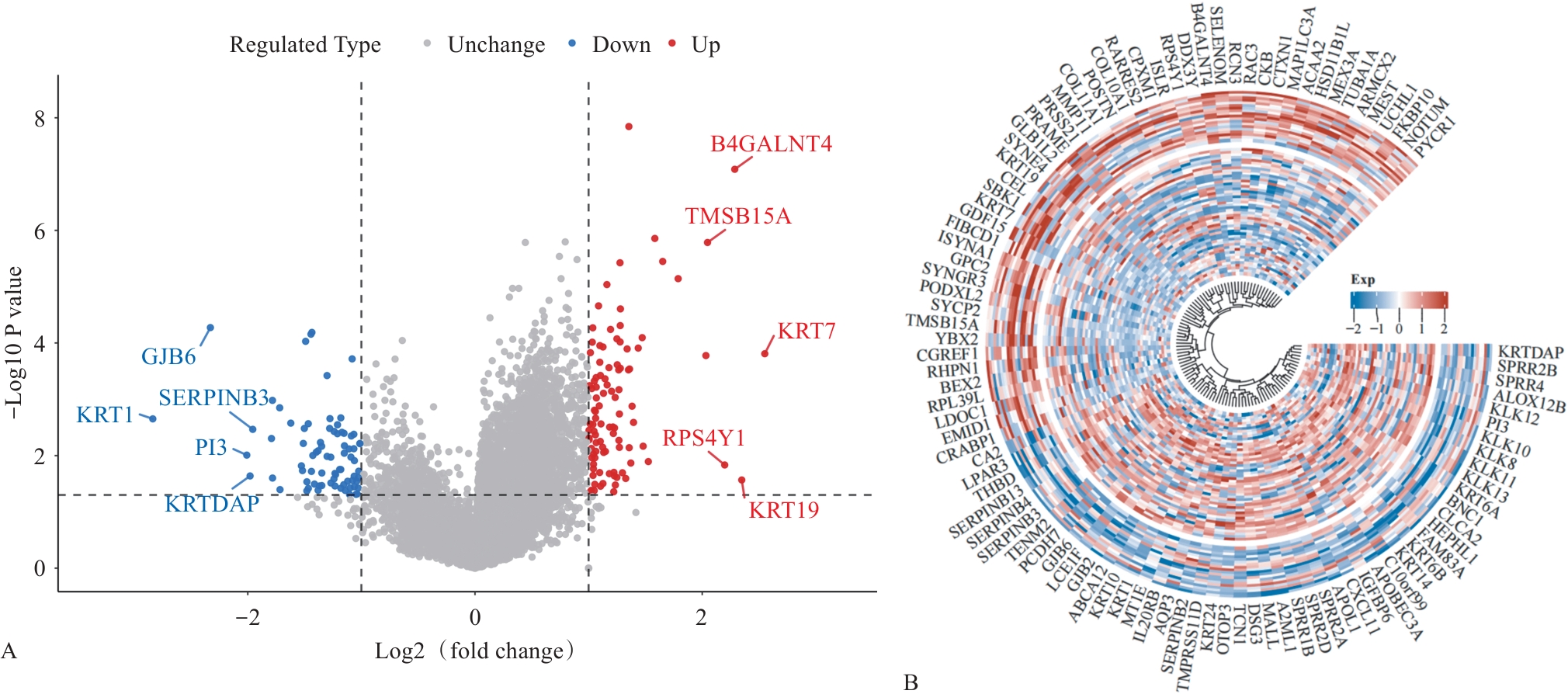
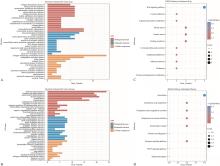
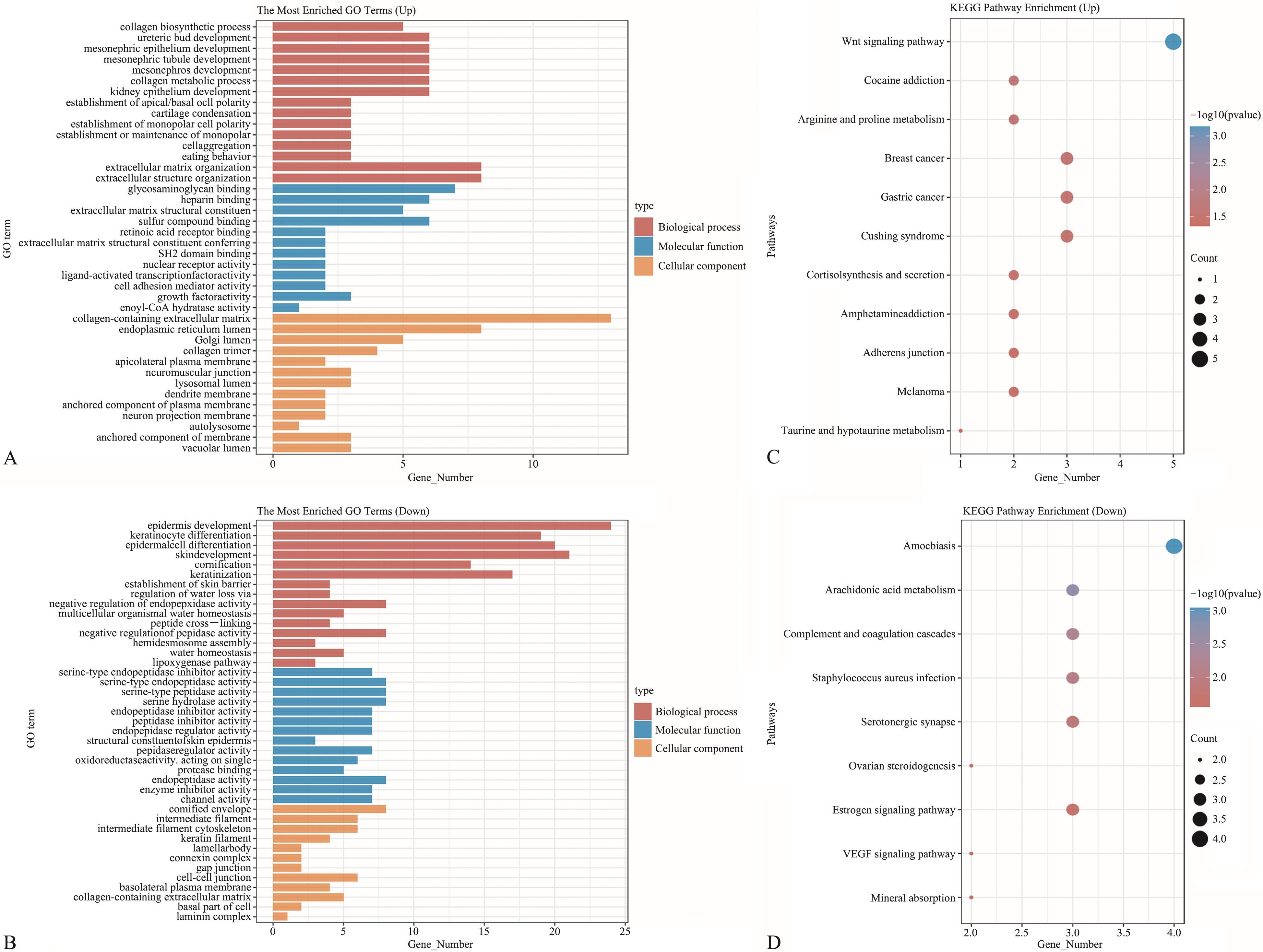
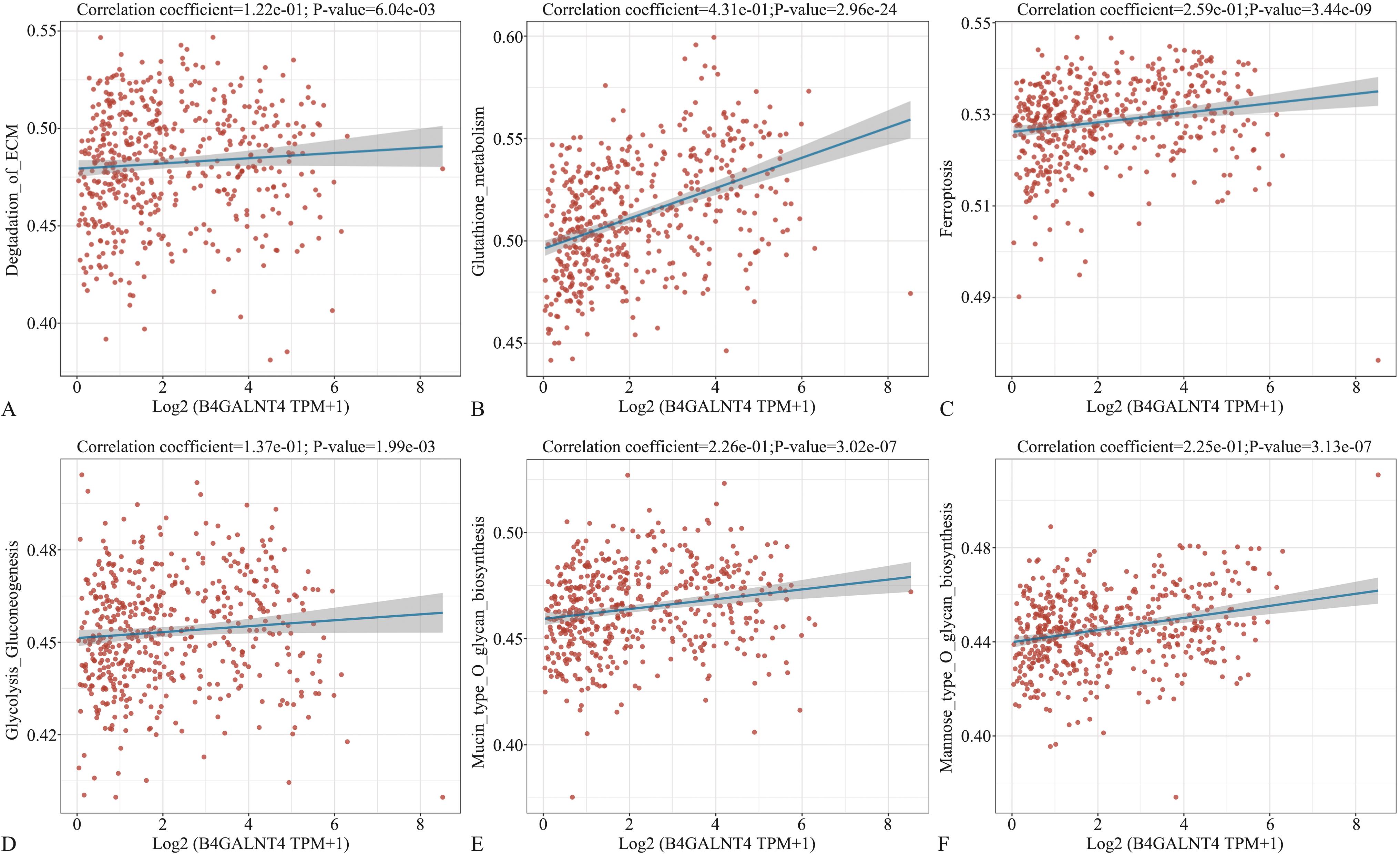
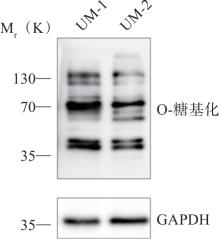
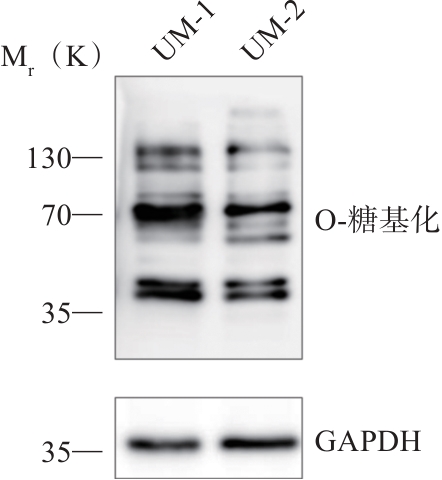
目的 通过生物信息学技术分析筛选转移和非转移型头颈鳞状细胞癌(HNSCC)组织中基因的表达规律,进一步筛选转移相关关键分子。 方法 从癌症基因组图谱数据集中选取了具有明确信息的19例HNSCC转移型和48例HNSCC非转移型患者的相关数据,通过生物信息学技术分析筛选在转移、非转移型HNSCC中上调和下调的差异表达基因,并对其进行聚类分析、京都基因与基因组百科全书分析和基因本体论分析。其中β-1,4-N-乙酰半乳糖胺基转移酶4(B4GALNT4)因其“调整后的P值”最小从而被选为关键基因,并通过逆转录及定量反转录聚合酶链式反应、蛋白免疫印迹实验对其进行细胞水平验证。 结果 与非转移型HNSCC组织相比,转移型中有76个基因显著下调,99个基因显著上调,其中B4GALNT4基因表达上调最显著。细胞水平检测发现,与转移能力弱的UM-2细胞相比,转移能力强的UM-1细胞中B4GALNT4的mRNA水平和蛋白表达水平均显著增加(P<0.05);与UM-2细胞相比,UM-1细胞中蛋白O-糖基化的水平也显著增加(P<0.05)。 结论 B4GALNT4在转移型HNSCC组织和细胞中均表达上调,其表达与蛋白质糖基化的水平呈正相关关系,B4GALNT4有望成为一个肿瘤转移防治新靶点。
中图分类号:
| [1] | Wu K, Sun Q, Liu D, et al. Alternative splicing landscape of head and neck squamous cell carcinoma[J]. Technol Cancer Res Treat, 2024, 23: 153303382412-72051. |
| [2] | Jiménez-Labaig P, Rullan A, Braña I, et al. Intratumoral therapies in head and neck squamous cell carcinoma: a systematic review and future perspectives[J]. Cancer Treat Rev, 2024, 127: 102746. |
| [3] | Afshari K, Sohal KS. Potential alternative therapeutic modalities for management head and neck squamous cell carcinoma: a review[J]. Cancer Control, 2023, 30: 10732748231185003. |
| [4] | Ruffin AT, Li H, Vujanovic L, et al. Improving head and neck cancer therapies by immunomodulation of the tumour microenvironment[J]. Nat Rev Cancer, 2023, 23(3): 173-188. |
| [5] | Gong Y, Bao L, Xu T, et al. The tumor ecosystem in head and neck squamous cell carcinoma and advan-ces in ecotherapy[J]. Mol Cancer, 2023, 22(1): 68. |
| [6] | Liu JC, Bhayani M, Kuchta K, et al. Patterns of distant metastasis in head and neck cancer at presentation: implications for initial evaluation[J]. Oral Oncol, 2019, 88: 131-136. |
| [7] | 张闳博, 韩伟. 头颈部鳞状细胞癌中蛋白质翻译后修饰的研究进展[J] . 中华口腔医学杂志, 2020, 55(10): 789-793. |
| Zhang HB, Han W. Research progress in protein post-translational modification in head and neck squamous cell carcinoma[J]. Chin J Stomatol, 2020, 55(10): 789-793. | |
| [8] | Li W, Li F, Zhang X, et al. Insights into the post-translational modification and its emerging role in shaping the tumor microenvironment[J]. Signal Transduct Target Ther, 2021, 6(1): 422. |
| [9] | Bilbrough T, Piemontese E, Seitz O. Dissecting the role of protein phosphorylation: a chemical biology toolbox[J]. Chem Soc Rev, 2022, 51(13): 5691-5730. |
| [10] | Geffen Y, Anand S, Akiyama Y, et al. Pan-cancer analysis of post-translational modifications reveals shared patterns of protein regulation[J]. Cell, 2023, 186(18): 3945-3967.e26. |
| [11] | Eichler J. Protein glycosylation[J]. Curr Biol, 2019, 29(7): R229-R231. |
| [12] | Yuan H, Wu X, Wu Q, et al. Lysine catabolism reprograms tumour immunity through histone crotonylation[J]. Nature, 2023, 617(7962): 818-826. |
| [13] | Zhang D, Tang Z, Huang H, et al. Metabolic regulation of gene expression by histone lactylation[J]. Nature, 2019, 574(7779): 575-580. |
| [14] | Schjoldager KT, Narimatsu Y, Joshi HJ, et al. Glo-bal view of human protein glycosylation pathways and functions[J]. Nat Rev Mol Cell Biol, 2020, 21(12): 729-749. |
| [15] | Lin MC, Huang MJ, Liu CH, et al. GALNT2 enhances migration and invasion of oral squamous cell carcinoma by regulating EGFR glycosylation and activity[J]. Oral Oncol, 2014, 50(5): 478-484. |
| [16] | Zhang J, Jiang S, Gu D, et al. Identification of novel molecular subtypes and a signature to predict prognosis and therapeutic response based on cuproptosis-related genes in prostate cancer[J]. Front Oncol, 2023, 13: 1162653. |
| [17] | Baba H, Kanda M, Sato Y, et al. Expression and malignant potential of B4GALNT4 in esophageal squamous cell carcinoma[J]. Ann Surg Oncol, 2020, 27(9): 3247-3256. |
| [18] | Bugshan A, Farooq I. Oral squamous cell carcinoma: metastasis, potentially associated malignant disorders, etiology and recent advancements in diagnosis[J]. F1000Res, 2020, 9: 229. |
| [19] | Chen L, Liu S, Tao Y. Regulating tumor suppressor genes: post-translational modifications[J]. Signal Transduct Target Ther, 2020, 5(1): 90. |
| [20] | Carnielli CM, Melo de Lima Morais T, Malta de Sá Patroni F, et al. Comprehensive glycoprofiling of oral tumors associates N-glycosylation with lymph node metastasis and patient survival[J]. Mol Cell Proteomics, 2023, 22(7): 100586. |
| [21] | Chen JT, Chen CH, Ku KL, et al. Glycoprotein B7-H3 overexpression and aberrant glycosylation in oral cancer and immune response[J]. Proc Natl Acad Sci U S A, 2015, 112(42): 13057-13062. |
| [22] | Chen YT, Chong YM, Cheng CW, et al. Identification of novel tumor markers for oral squamous cell carcinoma using glycoproteomic analysis[J]. Clin Chim Acta, 2013, 420: 45-53. |
| [23] | Vajaria BN, Patel KA, Patel PS. Role of aberrant glycosylation enzymes in oral cancer progression[J]. J Carcinog, 2018, 17: 5. |
| [24] | Chiang WF, Cheng TM, Chang CC, et al. Carcinoembryonic antigen-related cell adhesion molecule 6 (CEACAM6) promotes EGF receptor signaling of oral squamous cell carcinoma metastasis via the complex N-glycosylation[J]. Oncogene, 2018, 37(1): 116-127. |
| [25] | Sinevici N, Mittermayr S, Davey GP, et al. Salivary N-glycosylation as a biomarker of oral cancer: a pilot study[J]. Glycobiology, 2019, 29(10): 726-734. |
| [26] | Guu SY, Lin TH, Chang SC, et al. Serum N-glycome characterization and anti-carbohydrate antibody profiling in oral squamous cell carcinoma patients[J]. PLoS One, 2017, 12(6): e0178927. |
| [27] | Hirano K, Matsuda A, Kuji R, et al. Enhanced expression of the β4-N-acetylgalactosaminyltransfe-rase 4 gene impairs tumor growth of human breast cancer cells[J]. Biochem Biophys Res Commun, 2015, 461(1): 80-85. |
| [28] | Gill DJ, Tham KM, Chia J, et al. Initiation of GalNAc-type O-glycosylation in the endoplasmic reti-culum promotes cancer cell invasiveness[J]. Proc Natl Acad Sci U S A, 2013, 110(34): E3152-E3161. |
| [29] | Wu YM, Liu CH, Hu RH, et al. Mucin glycosyla-ting enzyme GALNT2 regulates the malignant cha-racter of hepatocellular carcinoma by modifying the EGF receptor[J]. Cancer Res, 2011, 71(23): 7270-7279. |
| [1] | 王倩,彭晖,章礼玉,杨宗澄,王雨琪,潘宇,周瑜. 影像组学在口腔鳞状细胞癌颈部淋巴结转移方面的应用进展[J]. 国际口腔医学杂志, 2025, 52(4): 507-513. |
| [2] | 陈冠君,符骁,冼海瑜,苏守达,温琦涛,邓伟,林诗耿,王涛. 133例口腔黏膜下纤维性变癌变的病理及临床生物学行为研究[J]. 国际口腔医学杂志, 2024, 51(5): 532-537. |
| [3] | 武旭,达林泰,苏尼特,尚多,周兴安,德乐黑巴特尔. CXCL趋化因子在头颈部鳞状细胞癌中的表达及临床意义[J]. 国际口腔医学杂志, 2024, 51(3): 303-309. |
| [4] | 王文轩,刘云坤,李冰芷,黄能文,侯泽宇,唐金茹,李龙江. 晚期糖基化终产物在口腔鳞状细胞癌发展及治疗的研究进展[J]. 国际口腔医学杂志, 2024, 51(2): 208-216. |
| [5] | 刘世一, 陈中, 张素欣. 程序性死亡受体/配体免疫治疗策略在人乳头瘤病毒阳性头颈部鳞状细胞癌中的研究进展[J]. 国际口腔医学杂志, 2024, 51(1): 21-27. |
| [6] | 柳江龙, 买买提吐逊·吐尔地. 超声造影在口腔鳞状细胞癌颈部转移性淋巴结诊断中的研究进展[J]. 国际口腔医学杂志, 2023, 50(5): 514-520. |
| [7] | 李奕君, 徐子昂, 李一. 前哨淋巴结在头颈部鳞状细胞癌检测的应用进展[J]. 国际口腔医学杂志, 2023, 50(5): 521-527. |
| [8] | 李洪芳,陈中,张素欣. 免疫检查点抑制剂联合放射治疗在头颈部鳞状细胞癌治疗中的研究进展[J]. 国际口腔医学杂志, 2022, 49(5): 614-620. |
| [9] | 李珊,陈林林. 上颌鳞状细胞癌临床颈部淋巴结阴性患者的治疗[J]. 国际口腔医学杂志, 2021, 48(4): 444-449. |
| [10] | 李明,原振英,南欣荣. 磁共振成像测量的浸润深度与舌鳞状细胞癌患者颈部淋巴结转移的相关性研究[J]. 国际口腔医学杂志, 2021, 48(3): 312-317. |
| [11] | 付世锦,曾刊,李鑫,杨静,汪成林,叶玲. 骨保护素/核因子κB受体活化因子配体影响肺癌细胞下颌骨与股骨转移差异的初步研究[J]. 国际口腔医学杂志, 2020, 47(5): 538-546. |
| [12] | 曾刊,李鑫,汪成林,杨静,叶玲. 骨微环境相关细胞对肿瘤细胞骨转移的作用及机制[J]. 国际口腔医学杂志, 2020, 47(1): 95-101. |
| [13] | 郝福,孙睿. 头颈部鳞状细胞癌第二原发癌的研究进展[J]. 国际口腔医学杂志, 2019, 46(5): 585-592. |
| [14] | 毛璐,鞠侯雨,任国欣. 程序性细胞死亡受体-1与其配体信号通路的调控及其在头颈鳞状细胞癌治疗中的研究进展[J]. 国际口腔医学杂志, 2018, 45(5): 560-565. |
| [15] | 余芯乐, 郑军, 徐江, 曾妍. 口腔鳞状细胞癌患者唾液和血清中N-α-乙酰基转移酶10的水平及其临床意义[J]. 国际口腔医学杂志, 2018, 45(4): 391-395. |
|
||