国际口腔医学杂志 ›› 2026, Vol. 53 ›› Issue (6): 798-809.doi: 10.7518/gjkq.2026146

• 专家笔谈 • 上一篇    下一篇

遵循颅面生长发育规律:科学性、创新性儿童早期矫治的再思考

李小兵()   

  1. 口腔疾病防治全国重点实验室 国家口腔医学中心 口腔疾病国家临床医学研究中心 四川大学华西口腔医院儿童口腔科 成都 610041
  • 收稿日期:2026-06-18 修回日期:2026-09-22 出版日期:2026-11-01 发布日期:2026-10-29
  • 通讯作者: 李小兵
  • 作者简介:李小兵,教授,硕士研究生导师,四川大学华西口腔医院儿童早期矫治专科主任,中华医学会儿科学分会口腔医学学组名誉组长,四川省口腔医学会儿童口腔专业委员会副主任委员,四川省口腔医学会正畸学会常务委员。《口腔疾病防治》《中国实用口腔科杂志》编委,国家卫生健康委员会“十四五”规划教材《儿童口腔医学》(第六版)编委。|李小兵,教授,博士,Email:909984963@qq.com

Growth and developmental principles of craniofacial structures: scientific and innovative deep thoughts on early orthodontic treatments

Xiaobing Li()   

  1. State Key Laboratory of Oral Diseases & National Center for Stomatology & National Clinical Research Center for Oral Diseases & Dept. of Pediatric Dentistry, West China Hospital of Stomatology, Sichuan University, Chengdu 610041, China
  • Received:2026-06-18 Revised:2026-09-22 Online:2026-11-01 Published:2026-10-29
  • Contact: Xiaobing Li

摘要:

儿童错𬌗畸形早期矫治是在遵循颅面𬌗生长发育基本规律,深入认知遗传及环境因素在错𬌗畸形发生发展中的作用,科学选择最佳矫治时机、矫治适应证,及时预防及阻断错𬌗畸形的发生发展,以达到降低错𬌗畸形发生率、最大限度地维护颅面𬌗形态结构协调与美观,维护正常口腔功能及良好的口腔健康的临床治疗。笔者从颅面𬌗生长发育规律由上到下的遗传“层级”控制、颅面生长发育平衡与代偿特性等生长发育特性出发,深入思考颅面𬌗生长发育在错𬌗畸形早期矫治临床策略上的指导性意义,提出早期矫治的生物学观点,即颅及颅底的发育决定了面颌发育的遗传框架,良好的头颅形态是良好的面颌形态的基础,早期矫治不能纠正颅及颅底形态异常导致的骨性错𬌗畸形;但随颅面𬌗结构层级的下降,早期矫治的疗效越好。错𬌗畸形是颅面𬌗“平衡”与“代偿”的失败,早期矫治的策略就是要促进颅面𬌗的“代偿”效能,降低颅面𬌗生长的“不平衡”对面部形态及咬合关系的不良影响,降低错𬌗畸形的严重性及简化错𬌗畸形的复杂性。当代正畸学颅面𬌗生长发育控制理论的深化促进了错𬌗畸形早期矫治的发展,错𬌗畸形不再认为是受遗传因素单独控制的发育异常,环境因素的影响在错𬌗畸形发生发展中也起到相当重要的影响。上气道因素、口腔功能因素在面颌发育异常中的作用日益受到临床医生的高度重视,特别是针对气道阻塞导致的错𬌗畸形的早期矫治已成为早期矫治的重要内容,并得到口腔正畸医生、耳鼻喉医生的高度重视,其临床管理通常需要耳鼻喉科、睡眠医学、儿科等多学科协作。目前,错𬌗畸形早期矫治无疑是正畸学界的热点,开展错𬌗畸形早期矫治必须要遵循颅面𬌗生长发育规律,创新性的儿童早期矫治临床新技术必须以颅面𬌗生长发育规律为基础,这是促进儿童早期矫治健康发展的科学路径。

关键词: 颅面𬌗生长发育, 儿童错𬌗畸形, 预防与阻断矫治, 口腔功能

Abstract:

Early orthodontic treatments for children’s malocclusion follow the principles of craniofacial and occlusal growth and development, deeply understand the role of genetic and environmental factors in the occurrence and development of the malocclusion, scientifically select the optimal timing and indications for treatments, and promptly prevent and intercept the occurrence and development of malocclusion. The goal of early orthodontic treatments is to reduce the incidence of the malocclusion, maximize the maintenance of the harmonized growth and aesthetic profiles of craniofacial and occlusal morphological structures, and preserve normal oral functions and good oral health. From the perspective of craniofacial and occlusal growth and development, this work elaborates on growth and developmental characteristics, including hierarchical control from top to bottom of the genetic regulation of craniofacial and occlusal growth pattern, and the balance and compensation features of craniofacial growth. It further explores the potential significance of craniofacial and occlusal growth patterns to guide the clinical strategies of early malocclusion treatment. The development of the cranium and cranial base genetically regulates the growth and development of maxillofacial complex. A good craniofacial and occlusal morphology determines a good maxillofacial morphology. Early orthodontic treatments cannot correct skeletal malocclusion caused by the abnormal morphology of the cranium and cranial base. However, as the structural hierarchy of the craniofacial and occlusal regions descends, the efficacy of early orthodontic treatment increases. The malocclusion is the disruption of the “balance” and “compensation” of the craniofacial and occlusal system. The strategy of early orthodontic treatment is to promote the “compensatory” efficiency of the craniofacial and occlusal system, reduce the adverse impact of the “imbalance” in craniofacial and occlusal growth on facial morphology and occlusal relationships, and decrease the severity and complexity of the malocclusion. With the establishment of contemporary orthodontic theories on the control of craniofacial and occlusal growth and development, early orthodontic treatment for malocclusion has been advanced. Malocclusion is no longer considered a developmental abnormality solely controlled by genetic factors; environmental factors also play an important role in its occurrence and development. The role of airway factors and oral functional factors in maxillofacial developmental abnormalities has received increasing attention from clinicians. Early orthodontic treatment for malocclusions caused by airway obstruction has become a major concern in early orthodontic intervention, drawing great attention from orthodontists and otolaryngologists. Its clinical management usually requires multidisciplinary collaboration of clinicians of otolaryngology, sleep medicine, and pediatrics. Early orthodontic treatment for malocclusion is a hot topic in orthodontics. The development of early orthodontic treatments for malocclusion must follow the principles of craniofacial and occlusal growth and development. This method is the scientific way to promote the development of early orthodontic treatments.

Key words: craniofacial and occlusal growth, malocclusions of children, preventive and interceptive orthodontics, oral function

中图分类号: 

  • R783.5

图 1

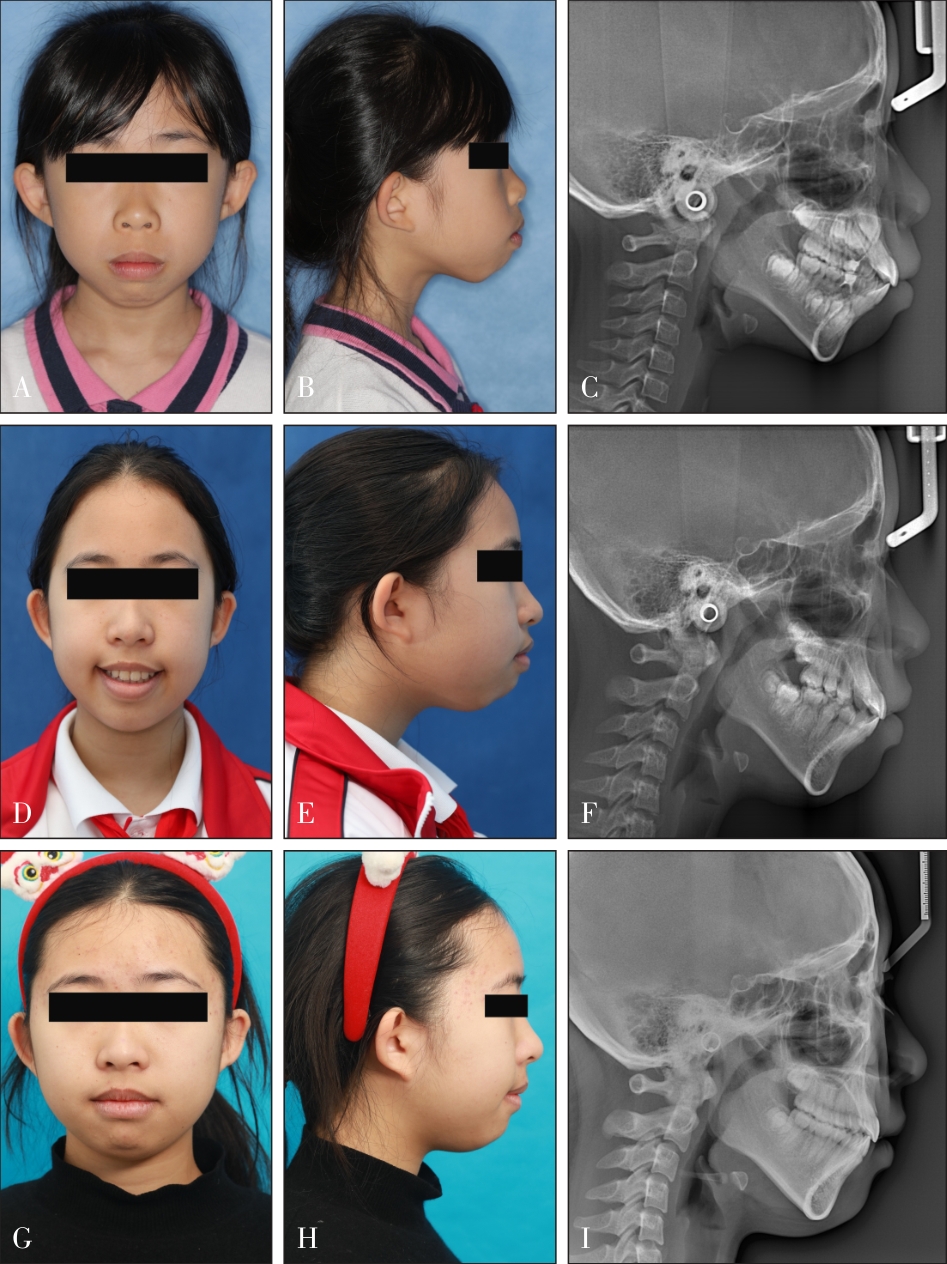
遗传性上颌发育过度的骨性Ⅱ类错畸形正畸治疗A~C:患者初诊面相及头颅侧位片;D~F:患者头帽肌激动器矫治后面相及头颅侧位片;G~I:正畸拔牙掩饰治疗后面相及头颅侧位片。该病例显示功能矫形治疗抑制上颌骨发育过度的疗效有限,上颌发育过度还需正畸拔牙掩饰治疗。"

图 2

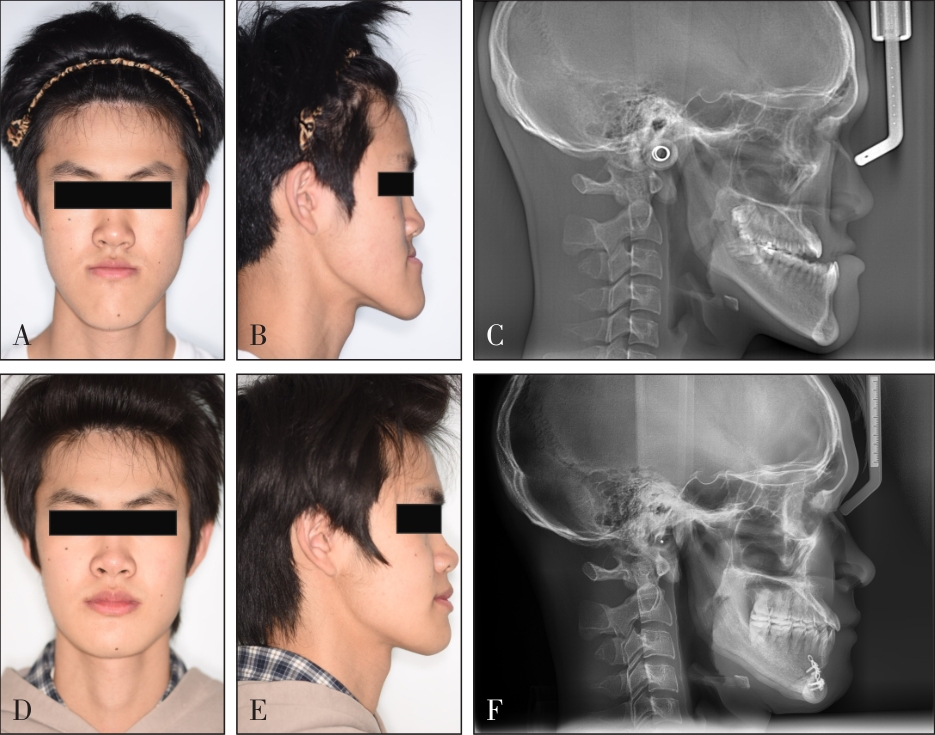
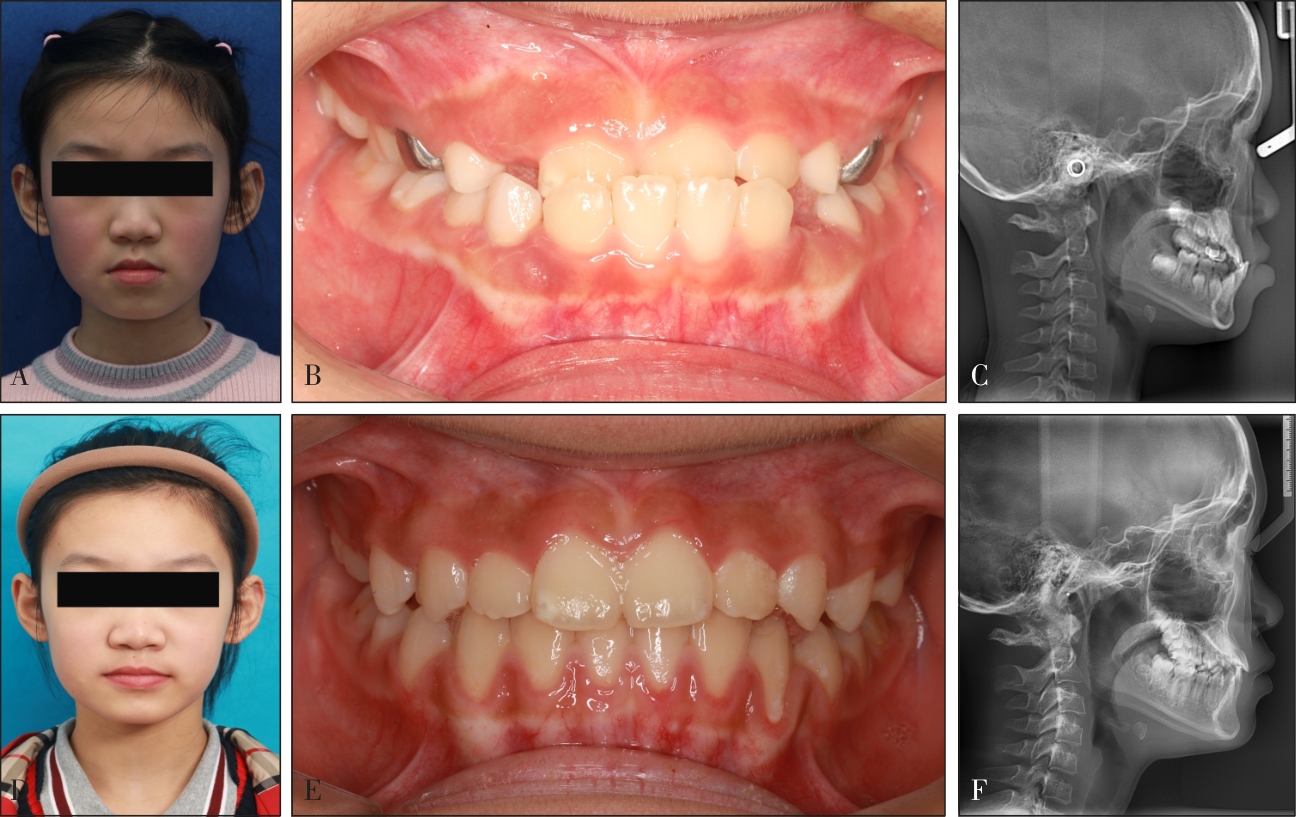
遗传性的严重骨性高角Ⅲ类错畸形患者A~C:正畸-正颌联合治疗术前面相及头颅侧位片;D~F:正畸-正颌联合治疗术后面相及头颅侧位片。其颅底结构异常(鞍角、关节角过小),垂直生长型(下颌角过大),功能矫形无效,临床选择正畸-正颌联合治疗纠正面部形态及咬合异常是合理、有效的治疗方案。"

图 3

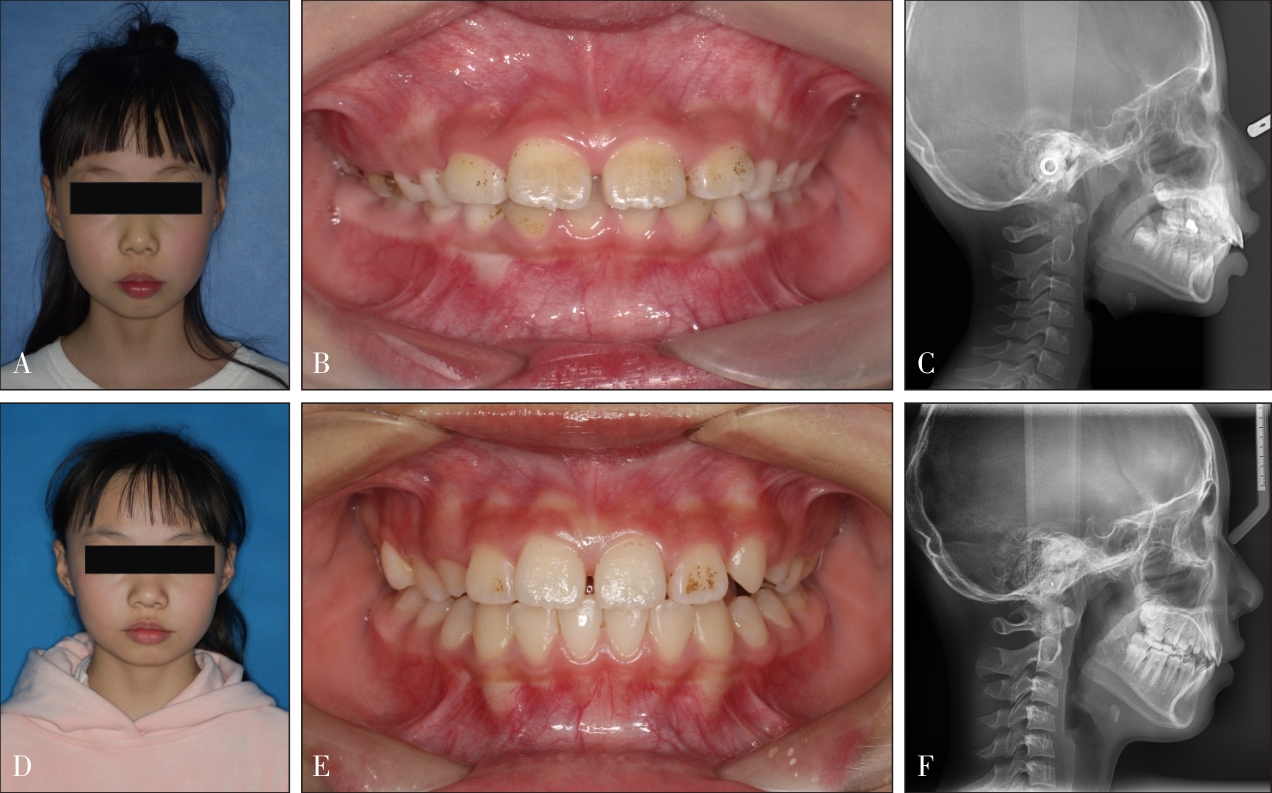
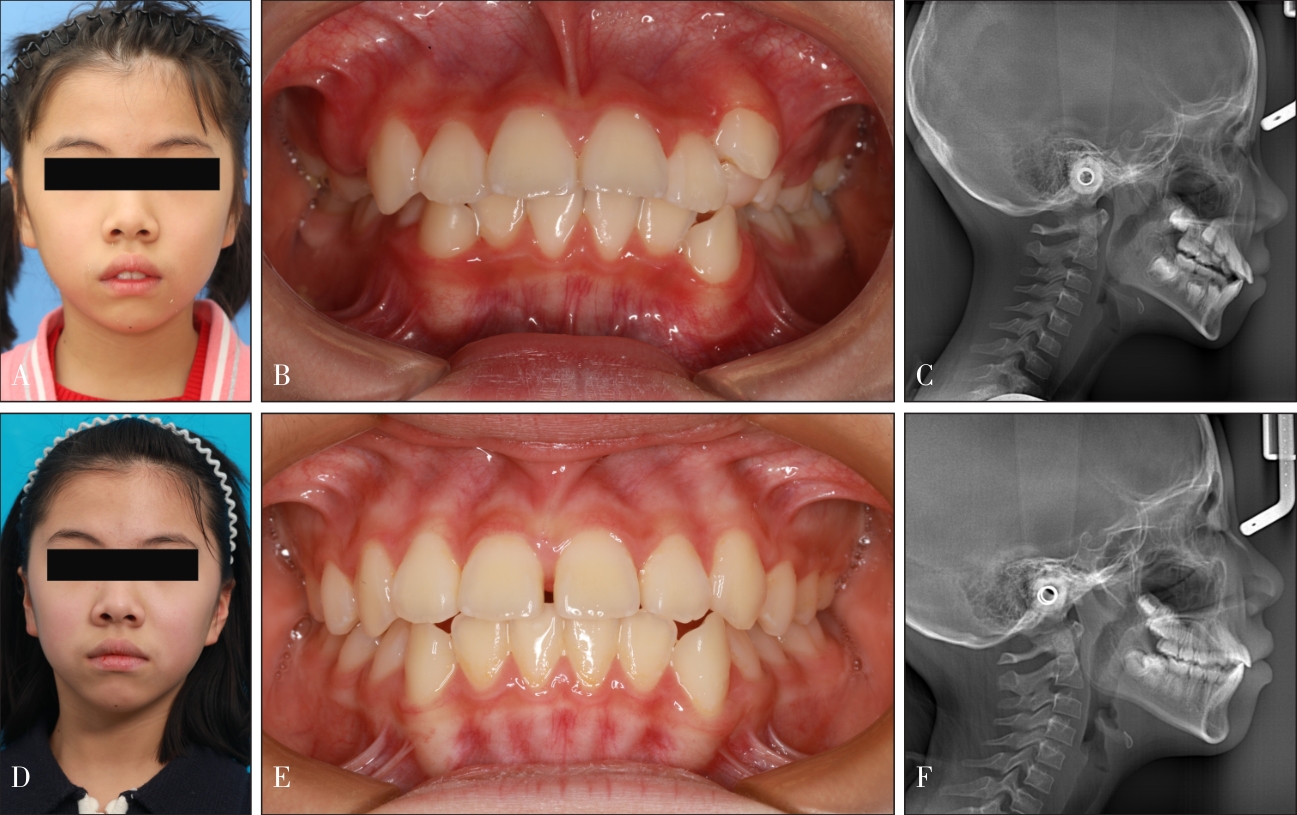
Ⅰ型功能调节器(FRⅠ)矫治骨性Ⅱ类错畸形前凸畸形的病例A~C:功能矫形前面相、口内相及头影测量片;D~F:功能矫形后,面相、口内相及头影测量片示面部凸面型改善。应用FRI型功能调节器有助于其正常口颌功能间隙的恢复、扩大牙弓,改善其骨性Ⅱ类错畸形(遗传性面部骨性框架基本特征仍维持)。"

图 4

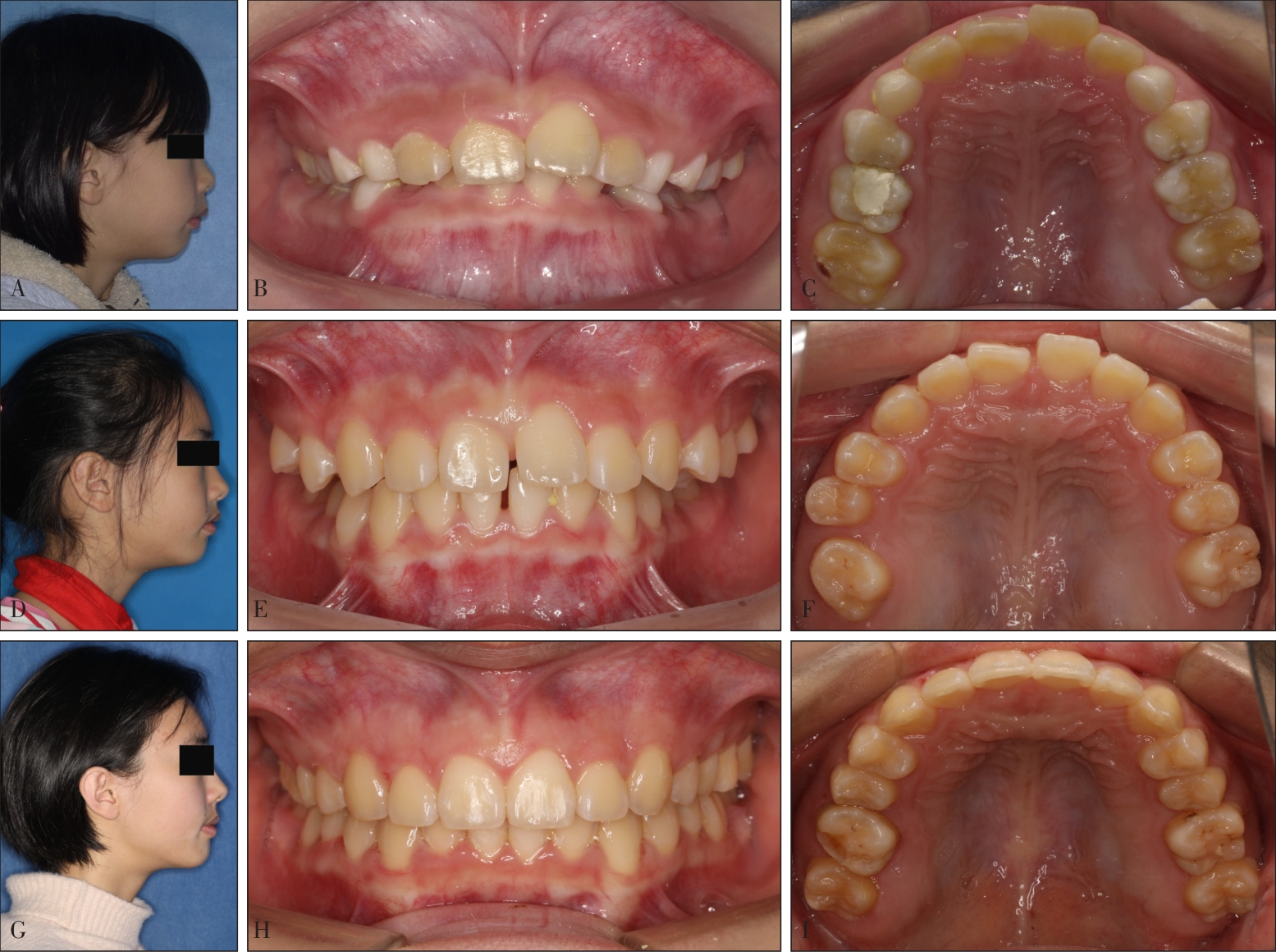
功能性Ⅱ类错畸形伴上牙弓狭窄、未见明显颅发育异常的患者A~C:患者治疗前面相及口内相;D~F:上颌扩弓+前导下颌后面相及口内相;G~I:固定多托槽综合矫治后面相及口内相。早期扩弓+功能前导矫治+固定多托槽矫治,矫治结果示Ⅱ类错畸形矢状向不调的临床疗效良好,患者恢复协调的面部形态及前后牙关系。"

图 5

Ⅲ型功能调节器(FRⅢ)矫治轻度骨性Ⅲ类前牙反畸形A~C:功能矫治前面相、口内相及头影测量片;D~F:功能矫治后面相、口内相及头影测量片。矫治疗效既包括了上下颌骨矢状向大小、位置的改善,也包括上颌前牙唇倾代偿上下颌骨矢状向的骨性不调的效果。"

图 6

口外高位/垂直牵引是控制垂直向生长早期矫治的常见方法A~C:治疗前面相、口内相及头影测量片;D~F:头帽肌激动器矫治后面相、口内相及头影测量片。通过头帽肌激动器控制上颌垂直向旋转,可见平面倾斜改善、下颌前导,改善了高角凸面型。"

图 7

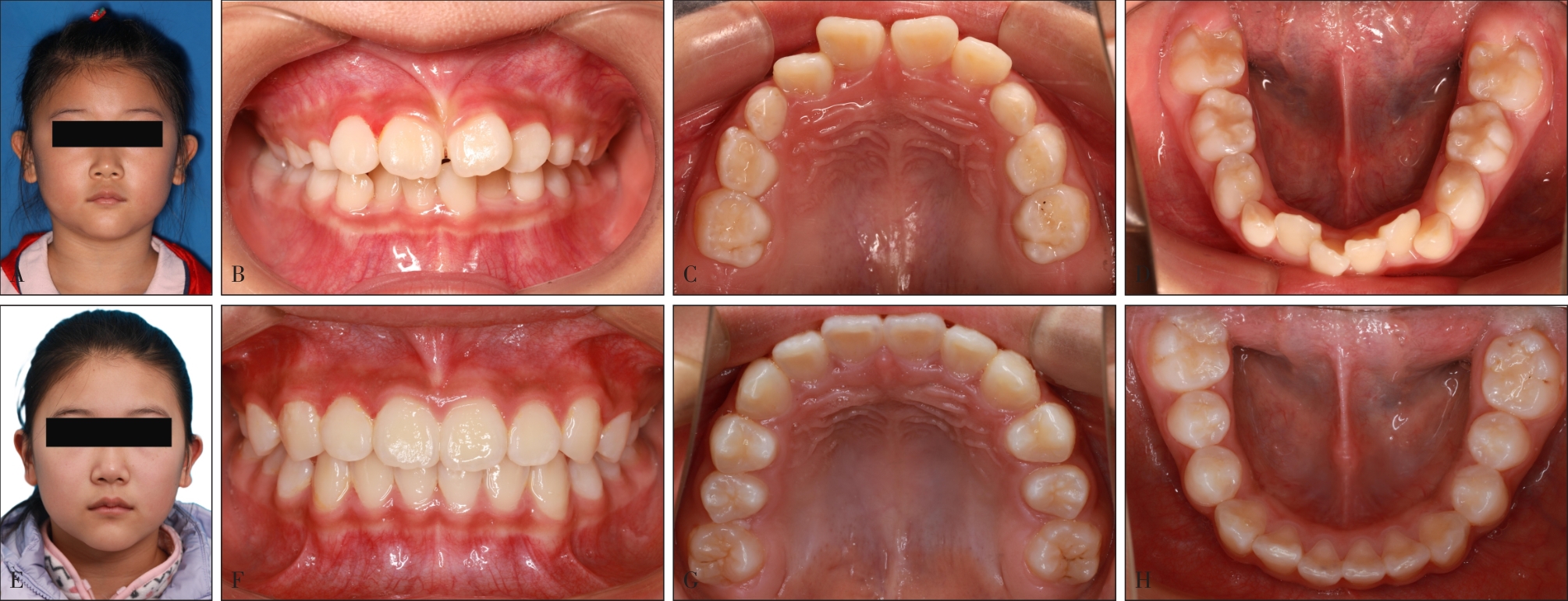
儿童错畸形早期塑形矫治可改善/纠正儿童轻度牙列拥挤及上下中线不齐A~D:治疗前上下牙列轻中度拥挤,上下中线不齐;E~H:塑形矫治后,上下牙弓形态大小发育恢复正常,牙列拥挤基本解除,上下中线对齐。牙弓发育是颅面形态的投射,在良好的颅面形态条件下,纠正牙弓形态大小生长发育的异常可早期矫治轻中度错畸形。"

图 8

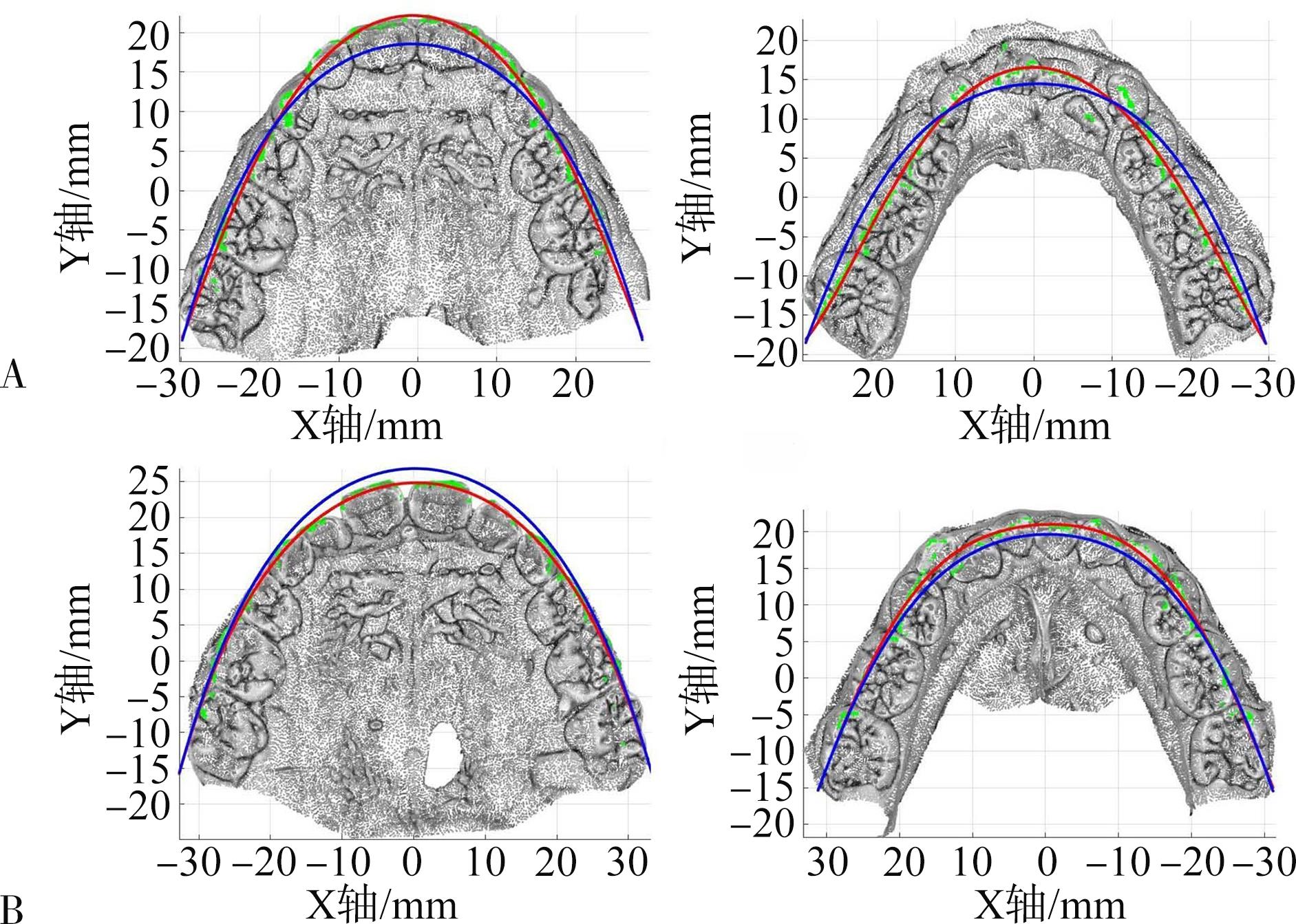
8岁女性患儿早期慢速扩弓矫治前后牙弓形态变化的LILUO数字化智能系统分析A:矫治前上下颌数字化模型;B:矫治后上下颌数字化模型,可见矫治后的实际牙弓形态更贴近标准牙弓曲线(红线:患儿牙弓形态曲线;蓝线:该年龄段女性患儿的标准牙弓曲线)。"

图 9

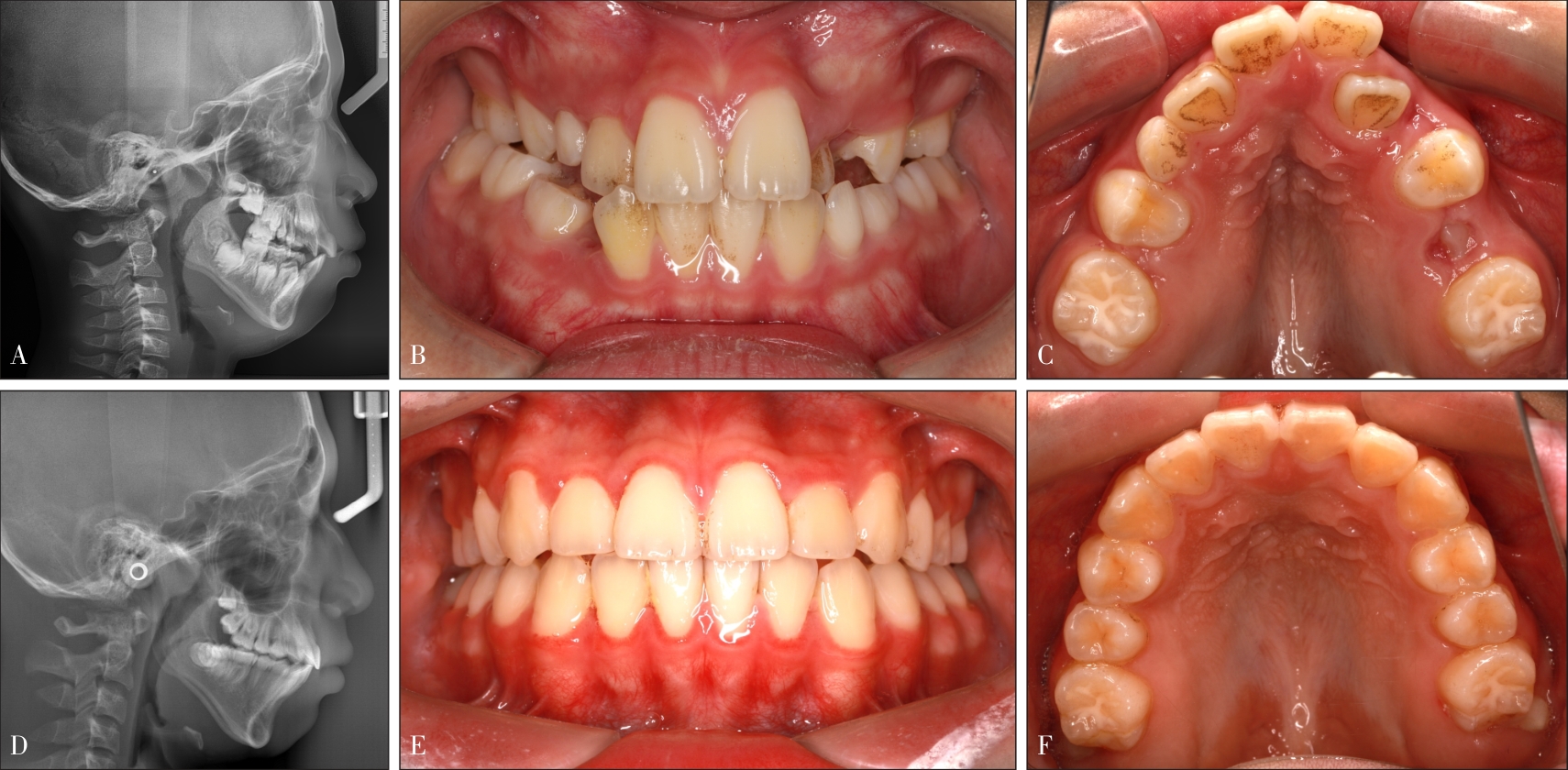
儿童腺样体肥大、上牙弓狭窄的高角患者A~C:治疗前头影测量片及口内相;D~F:早期矫治及Ⅱ期正畸矫治后头影测量片及口内相。儿童腺样体肥大、上气道阻塞、口呼吸、高角,导致上牙弓狭窄、牙列中度拥挤、右侧后牙反畸形,早期矫治扩大上牙弓有利于上气道扩大及Ⅱ期正畸综合矫治排平排齐治疗。"

图 10

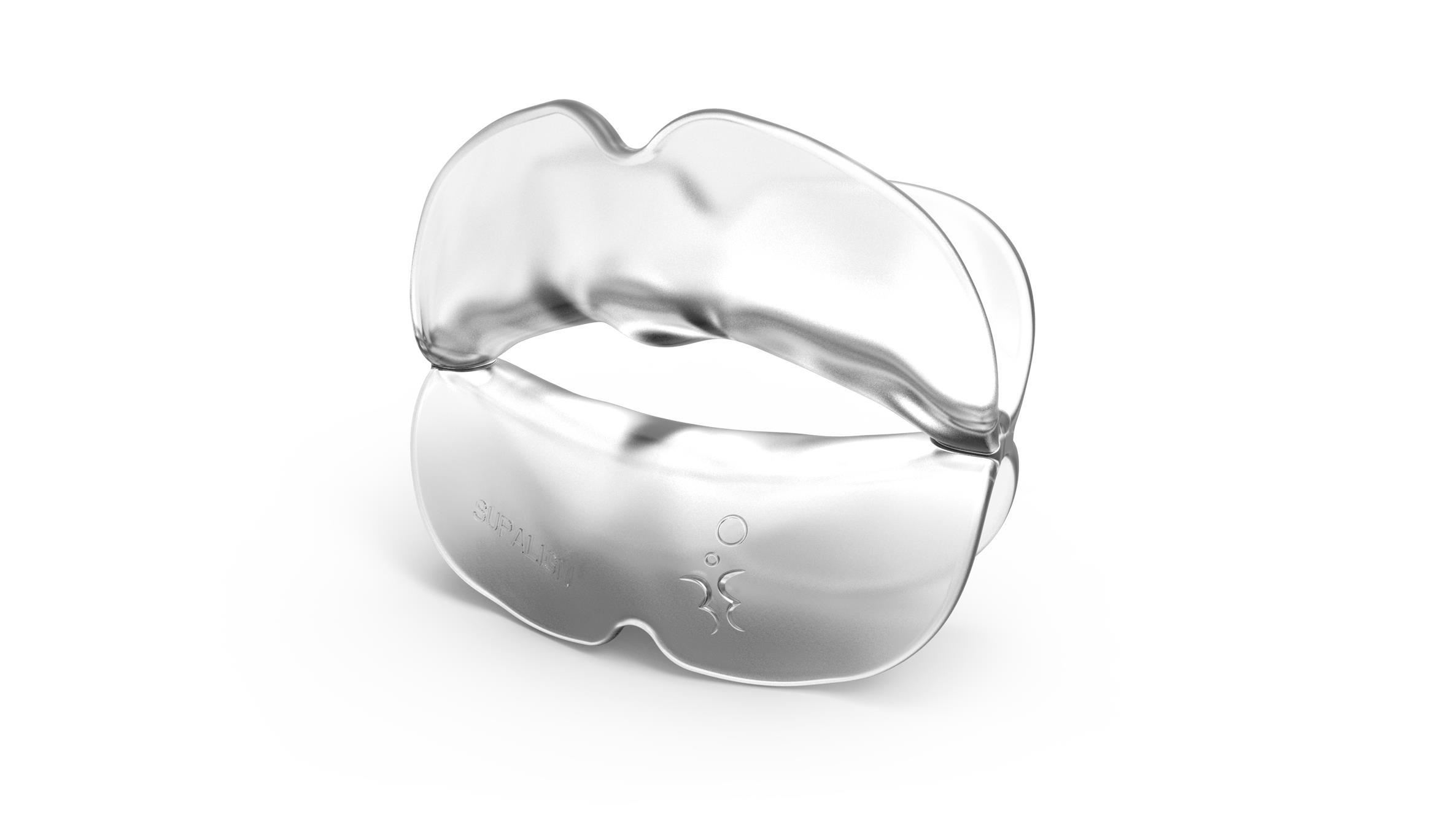
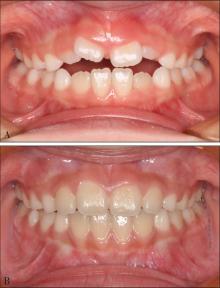
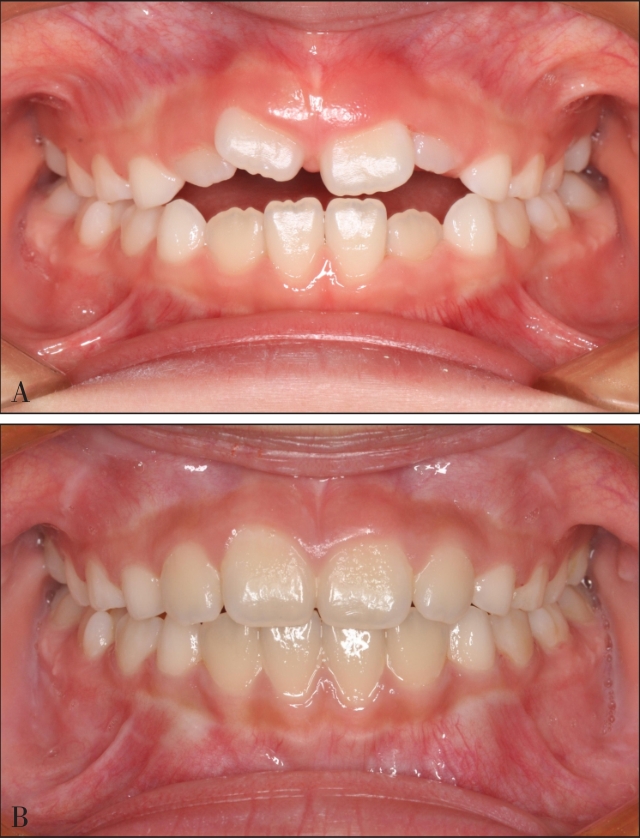
吐舌吞咽辅助训练器:“青蛙嘴”"

图 11

儿童前牙局部开畸形伴轻度牙列拥挤错畸形,在混合牙列早期(7岁)“青蛙嘴”阻断异常吐舌吞咽,辅助早期扩弓,矫治错畸形A:治疗前口内相;B:治疗后口内相。"

[1] Proffit WR, Fields HW, Larson BE, 等. 当代口腔正畸学(第6版)[M]. 王林, 严斌, 译. 南京: 江苏凤凰科学技术出版社, 2021.
Proffit WR, Fields HW, Larson BE, et al. Contemporary orthodontics (6th edition)[M]. Wang L, Yan B, translate. Nanjing: Jiangsu Phoenix Science and Technology Press, 2021.
[2] Enlow DH, Hans MG. 颅面生长发育学(第2版)[M]. 林久祥, 译. 北京: 北京大学医学出版社, 2012.
Enlow DH, Hans MG. Essentials of facial growth (2nd edition)[M]. Lin JX, translate. Beijing: Peking University Medical Press, 2012.
[3] Aboudara C, Hatcher D, Nielsen I, et al. A three-dimensional evaluation of the upper airway in adolescents[J]. Orthod Craniofac Res, 2003, 6(s1): 173-175.
[4] Baumrind S. Integrated three-dimensional craniofacialmapping: background, principles, and perspectives[J]. Semin Orthod, 2001, 7(4): 223-232.
[5] Sanggarnjanavanich S, Sekiya T, Nomura Y, et al. Cranial-base morphology in adults with skeletal Class Ⅲ malocclusion[J]. Am J Orthod Dentofacial Orthop, 2014, 146(1): 82-91.
[6] de Almeida KCM, Raveli TB, Vieira CIV, et al. Influence of the cranial base flexion on Class Ⅰ, Ⅱ and Ⅲ malocclusions: a systematic review[J]. Dent Press J Orthod, 2017, 22(5): 56-66.
[7] Festa P, Mansi N, Varricchio AM, et al. Association between upper airway obstruction and malocclusion in mouth-breathing children[J]. Acta Otorhinolaryngol Ital, 2021, 41(5): 436-442.
[8] Patil GV, Lakhe P, Niranjane P. Maxillary expansion and its effects on circummaxillary structures: a review[J]. Cureus, 2023, 15(1): e33755.
[9] Lin LZ, Zhao TT, Qin DC, et al. The impact of mouth breathing on dentofacial development: a concise review[J]. Front Public Health, 2022, 10: 929165.
[10] Bastir M, Rosas A, O'Higgins P. Craniofacial levels and the morphological maturation of the human skull[J]. J Anat, 2006, 209(5): 637-654.
[11] Kluemper GT, Spalding PM. Realities of craniofacial growth modification[J]. Atlas Oral Maxillofac Surg Clin North Am, 2001, 9(1): 23-51.
[12] 瞿然奕, 汪席均, 江凌勇. 垂直向控制在矫正成人骨性Ⅱ类高角错𬌗畸形应用中的研究进展[J]. 中国口腔颌面外科杂志, 2021, 19(3): 284-288.
Qu RY, Wang XJ, Jiang LY. Vertical control app-liance in treatment of skeletal Class Ⅱ hyperdivergent adult patients: review of the literature[J]. China J Oral Maxillofac Surg, 2021, 19(3): 284-288.
[13] 李小兵. 牙弓/牙槽骨弓的塑形矫治——基于牙弓形态发育不良的儿童错𬌗畸形诊断与阻断治疗[J]. 华西口腔医学杂志, 2016, 34(6): 556-563.
Li XB. Dental alveolar bone and dental arch remo-deling in children: orthodontic diagnosis and treatments based on individual child arch development[J]. West China J Stomatol, 2016, 34(6): 556-563.
[14] Luo JQ, Liu TQ, Wang Y, et al. The association between dental and dentoalveolar arch forms of children with normal occlusion and malocclusion: a cross-sectional study[J]. BMC Oral Health, 2024, 24(1): 731.
[15] Luo JQ, Ma YX, Ma YW, et al. Dynamic changes in dental arches during growth and development: clinical applications and implications[J]. Clin Oral Investig, 2025, 29(5): 281-289.
[16] Behrents RG, Shelgikar AV, Conley RS, et al. Obstructive sleep apnea and orthodontics: an American Association of Orthodontists White Paper[J]. Am J Orthod Dentofacial Orthop, 2019, 156(1): 13-28.e1.
[17] 赵婷婷, 贺红. 儿童口呼吸相关错𬌗畸形的早期矫治[J]. 中华口腔医学杂志, 2024, 59(9): 892-897.
Zhao TT, He H. Early orthodontic treatment of mouth breathing related to malocclusion in children[J]. Chin J Stomatol, 2024, 59(9): 892-897.
[18] Fellus P. Innovative rehabilitation for orofacial pra-xis[J]. Int Dent J, 2021, 71: S37.
[19] Begg PR. Stone age man's dentition[J]. Am J Orthod, 1954, 40(4): 298-312.
[20] Corruccini RS. An epidemiologic transition in dental occlusion in world populations[J]. Am J Orthod, 1984, 86(5): 419-426.
[21] Corruccini RS. Australian aboriginal tooth succession, interproximal attrition, and Begg's theory[J]. Am J Orthod Dentofacial Orthop, 1990, 97(4): 349-357.
[22] Varrela J. Masticatory function and malocclusion: a clinical perspective[J]. Semin Orthod, 2006, 12(2): 102-109.
[23] Defabianis P, Carli E, Cogo C, et al. Mechanics of facial growth in young patients[J]. Eur J Paediatr Dent, 2022, 23(4): 288-290.
[1] 赵芳综述 刘东旭审校. 功能性磁共振在口腔医学中的应用[J]. 国际口腔医学杂志, 2009, 36(5): 586-589.
Viewed
Full text


Abstract

Cited

  Shared   
  Discussed   
[1] 范震 赵云凤. 人工口腔装置的组成及应用[J]. 国际口腔医学杂志, 2003, 30(05): 381 -383 .
[2] 邵美瑛, 郑广宁, 胡涛. 牛牙症根管治疗1 例和文献综述[J]. 国际口腔医学杂志, 2009, 36(3): 288 -290 .
[3] 王晓春,梁景平. 成牙本质细胞分离技术的新进展[J]. 国际口腔医学杂志, 2004, 31(06): 452 -454 .
[4] 李石,段银钟,. 远移上颌磨牙对牙合及颌面垂直关系的影响[J]. 国际口腔医学杂志, 2006, 33(03): 234 -236 .
[5] 赵巍综述 于丹妮审校. spx 蛋白调控作用的研究进展[J]. 国际口腔医学杂志, 2012, 39(6): 786 -789 .
[6] 张明珠综述 梁景平审校. 口腔致病菌与动脉粥样硬化的研究进展[J]. 国际口腔医学杂志, 2008, 35(1): 22 -25 .
[7] 李琪综述 苏剑生审校. 有关箍效应的争议[J]. 国际口腔医学杂志, 2009, 36(6): 719 -722 .
[8] 李建华综述 林新平审校. 正畸支抗用微种植钉对牙根和牙周组织造成的损伤及损伤后的组织学变化[J]. 国际口腔医学杂志, 2012, 39(2): 277 -280 .
[9] 周向向综述 刘来奎审校. 肿瘤微环境与上皮—间质转化的机制[J]. 国际口腔医学杂志, 2010, 37(01): 45 -47 .
[10] 孙崇奎,卢礼兵,朱硃,龚其美,肖晓蓉,肖丽英,周学东,李燕. 醋酸铅棉球法筛选口腔产硫化氢细菌的研究[J]. 国际口腔医学杂志, 2010, 37(5): 507 -510 .